Editorial Note: This article is a part of the Stella Maris Global Sociology Series, published in partnership with Applied Worldwide.

Introduction
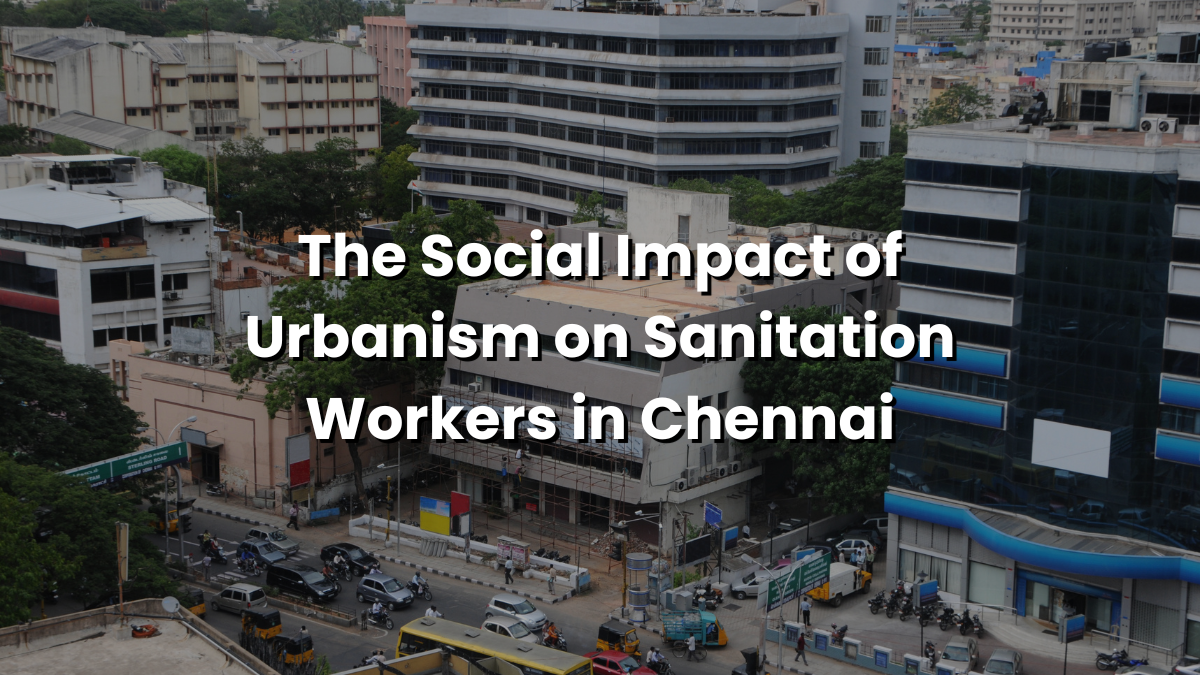
Urbanization is one of the defining features of contemporary India, reshaping the economic, spatial, and social organization of cities. Chennai, the capital of Tamil Nadu, has emerged as one of India’s fastest-growing metropolitan regions. The Chennai Metropolitan Area extends over approximately 1,189 sq. km and has experienced rapid demographic and economic expansion over the past two decades (Chennai Metropolitan Development Authority [CMDA], 2008). According to the Census of India (2011), Chennai had a population of approximately 8.65 million, while recent urban projections indicate continued population growth driven by industrialization, migration, and the expansion of the service sector (United Nations Department of Economic and Social Affairs [UN DESA], 2024).
The city’s economic transformation has been driven primarily by manufacturing, construction, information technology, finance, and other service industries. Although these developments have significantly contributed to economic growth, they have also intensified socio-spatial inequalities, particularly among workers engaged in essential urban services. One of the most vulnerable occupational groups comprises sanitation workers, whose labour sustains urban cleanliness, environmental health, and public sanitation but remains inadequately recognized and protected.
Chennai generates several thousand tonnes of municipal solid waste every day, requiring an extensive sanitation workforce responsible for waste collection, street sweeping, drainage maintenance, and environmental sanitation (Greater Chennai Corporation, 2024; Central Pollution Control Board, 2023). Despite their indispensable contribution to urban governance and public health, sanitation workers continue to experience insecure employment, inadequate housing, occupational hazards, and persistent social marginalization. This article examines how rapid urbanization has shaped the labour conditions, housing experiences, and socio-spatial exclusion of sanitation workers in Chennai.
Significance of Sanitation Workers
Sanitation workers constitute one of the most essential components of urban governance. Through waste collection, street sweeping, sewer maintenance, and drainage management, they contribute directly to environmental sustainability, disease prevention, and public health. Their labour enables the efficient functioning of urban infrastructure while enhancing the overall quality of urban life.
Rapid urbanization has substantially increased the demand for municipal sanitation services. The Greater Chennai Corporation has expanded solid waste management initiatives, including source segregation, scientific processing of municipal waste, bio mining of legacy waste, and improvements in waste collection systems (Greater Chennai Corporation, 2024; Central Pollution Control Board, 2023). These initiatives depend fundamentally on the continuous labour of sanitation workers.
Beyond their environmental contribution, sanitation workers support urban economic productivity by maintaining hygienic public spaces that facilitate mobility, commerce, and everyday urban activities. Nevertheless, despite performing work that is indispensable to the functioning of the city, they continue to receive limited social recognition and remain vulnerable to economic insecurity, occupational risks, and social discrimination. Their marginalization illustrates the contradiction between the indispensable nature of sanitation work and its limited social and institutional recognition.
Structural Inequalities
The benefits of urbanization have not been distributed equally across occupational groups. Sanitation workers continue to experience structural inequalities arising from contractual employment, informal labour arrangements, caste-based occupational segregation, and unequal access to social protection.
A substantial proportion of sanitation workers in Indian cities are employed through contractual arrangements, resulting in insecure employment, comparatively lower wages, and restricted access to employment benefits such as healthcare, pensions, paid leave, and insurance (International Labour Organization, 2019; National Commission for Safai Karamcharis, 2023). Such employment arrangements frequently prioritize cost efficiency over worker welfare, thereby reinforcing labour precarity.
These economic disadvantages intersect with long-standing caste-based occupational inequalities. Sanitation work in India continues to be disproportionately performed by members of historically marginalized Scheduled Caste communities, reflecting the persistence of caste-linked occupational stratification (National Commission for Safai Karamcharis, 2023). Consequently, occupational vulnerability is reinforced by social exclusion, limiting opportunities for upward social and economic mobility.
Spatial inequalities further compound these challenges. Many sanitation workers reside in peripheral resettlement colonies such as Kannagi Nagar, Perumbakkam, and Semmenchery, where access to transportation, healthcare, education, and employment opportunities remains comparatively limited (Coelho & Raman, 2013; Housing and Land Rights Network, 2017). The relocation of economically disadvantaged communities from central urban areas to peripheral settlements has contributed to the reproduction of socio-spatial marginalization, increasing commuting costs and restricting access to essential urban services.
Thus, although sanitation workers remain indispensable to Chennai’s urban development, the processes of urbanization have simultaneously reproduced structural inequalities that shape their labour conditions, residential locations, and everyday lived experiences.
Housing Exclusion of Sanitation Workers
Urban housing in Chennai reflects significant socio-spatial inequalities. Rapid urban expansion, rising land values, and market-oriented real estate development have increasingly concentrated affordable housing at the urban periphery. Consequently, sanitation workers—many of whom are employed on contractual or low-wage terms—face considerable barriers in accessing adequate housing within the city. Peripheral resettlement colonies such as Kannagi Nagar, Semmenchery, and Perumbakkam have become major residential locations for displaced low-income households, including sanitation workers (Housing and Land Rights Network [HLRN], 2017; Coelho & Raman, 2013).
These resettlement colonies were established to relocate families displaced by infrastructure development, environmental restoration, and urban renewal projects. Although intended to provide secure housing, many of these settlements continue to experience inadequate access to public transportation, healthcare, education, sanitation infrastructure, and employment opportunities (HLRN, 2017). The increased distance between residential areas and workplaces imposes additional commuting costs, travel time, and financial burdens on sanitation workers, thereby reinforcing socio-spatial exclusion.
The concentration of sanitation workers in peripheral settlements demonstrates that urban development has often prioritized economic growth and land development over equitable access to urban resources. Consequently, housing inequality has become a significant dimension of the broader marginalization experienced by sanitation workers in Chennai.
Labour Status of Sanitation Workers
The labour conditions of sanitation workers in Chennai are characterized by contractual employment, informalisation, occupational risk, and limited social protection. Although sanitation services constitute an essential public function, a substantial proportion of workers are employed through private contractors rather than directly by the Greater Chennai Corporation. Contractual employment frequently results in comparatively lower wages, employment insecurity, irregular salary payments, and restricted access to pensions, healthcare benefits, paid leave, and other social security provisions (International Labour Organization [ILO], 2019; National Commission for Safai Karamcharis [NCSK], 2023).
In addition to economic insecurity, sanitation workers face significant occupational hazards arising from prolonged exposure to solid waste, sewage, hazardous materials, and unsanitary working environments. Inadequate provision of personal protective equipment, insufficient occupational safety measures, and limited access to healthcare further increase their vulnerability (ILO, 2019).
The expansion of outsourcing and privatization within municipal sanitation services has intensified labour precarity. While private participation has contributed to operational efficiency in certain areas, it has also generated concerns regarding wage disparities, weakened employer accountability, and unequal employment conditions. Consequently, sanitation workers remain among the most economically vulnerable occupational groups despite performing work that is indispensable to urban governance and public health.
State Policies and Sanitation Labour
The Government of Tamil Nadu and the Government of India have introduced several policy initiatives to improve housing, sanitation, and urban infrastructure. Programmes such as the Pradhan Mantri Awas Yojana (Urban) and housing schemes implemented through the Tamil Nadu Urban Habitat Development Board aim to provide affordable housing for economically weaker sections and improve living conditions in urban areas (Government of India, 2021).
Despite these policy interventions, implementation challenges remain significant. Large-scale resettlement projects have frequently relocated low-income households to peripheral locations, limiting access to employment centres, educational institutions, healthcare facilities, and public transport (HLRN, 2017; Coelho & Raman, 2013). Consequently, although housing shortages may be partially addressed, socio-spatial inequalities continue to persist.
Similarly, labour policies relating to occupational safety, social protection, and sanitation services have contributed to improvements in worker welfare. Nevertheless, uneven implementation, continued contractual employment, and inadequate monitoring have limited the effectiveness of these measures. Strengthening labour regulation, expanding access to social security, and improving occupational safety standards remain essential for enhancing the welfare of sanitation workers.
Labour Conditions of Sanitary and Conservancy Workers
Although sanitary and conservancy workers collectively contribute to maintaining urban sanitation, their labour conditions vary according to the nature of their employment and responsibilities. Sanitary workers, including street sweepers, waste collectors, and drain cleaners, are predominantly employed on contractual or casual terms. Their work involves prolonged exposure to municipal waste, hazardous materials, adverse weather conditions, and occupational health risks. Limited access to personal protective equipment (PPE), healthcare, and social security further increases their vulnerability (International Labour Organization [ILO], 2019).
Conservancy workers engaged in mechanized waste handling and specialized sanitation operations often receive comparatively better employment conditions, including greater job security, improved remuneration, and enhanced occupational safety measures. Nevertheless, disparities in wages, employment benefits, and working conditions continue to exist within the sanitation workforce. Addressing these inequalities requires stronger enforcement of labour legislation, equitable employment practices, and universal access to occupational health and safety standards.
Development Policy Measures
Improving the welfare of sanitation workers requires an integrated approach that combines labour protection, housing security, and inclusive urban planning. Housing policies should prioritize in-situ rehabilitation wherever feasible, reducing the need for peripheral relocation that increases travel costs and restricts access to employment opportunities. Affordable housing programmes implemented under the Pradhan Mantri Awas Yojana (Urban) and the Tamil Nadu Urban Habitat Development Board should ensure adequate access to transportation, healthcare, education, sanitation infrastructure, and other essential public services (Government of India, 2021).
Labour reforms should focus on reducing excessive dependence on contractual employment by strengthening direct municipal recruitment wherever possible. Universal access to social security benefits, including health insurance, pensions, paid leave, and occupational accident compensation, should be ensured for all sanitation workers irrespective of their employment status. Regular provision of high-quality personal protective equipment, periodic medical examinations, occupational health training, and strict enforcement of workplace safety standards are essential for protecting workers from occupational hazards (ILO, 2019).
Furthermore, urban governance should actively promote the social inclusion of sanitation workers by recognizing their contribution to environmental sustainability and public health. Public awareness campaigns, anti-discrimination initiatives, and inclusive urban policies can contribute to reducing the social stigma historically associated with sanitation work while enhancing workers’ dignity, rights, and quality of life.
Conclusion
Sanitation workers remain indispensable to the functioning of Chennai’s rapidly expanding metropolitan economy. Despite their essential contribution to environmental sanitation, disease prevention, and public health, they continue to experience multiple forms of socio-economic and spatial marginalization. Urbanization has generated significant economic opportunities for the city; however, these benefits have not been distributed equitably among all occupational groups. Contractual employment, occupational hazards, inadequate housing, caste-based inequalities, and peripheral resettlement continue to shape the lived experiences of sanitation workers.
The findings of this study demonstrate that housing exclusion, labour precarity, and uneven policy implementation reinforce structural inequalities rather than promoting inclusive urban development. Addressing these challenges requires integrated policy interventions that combine secure employment, equitable housing, comprehensive social protection, occupational safety, and inclusive urban planning. Strengthening institutional accountability and recognising sanitation workers as essential contributors to sustainable urban development are critical for achieving greater social justice and urban equity in Chennai.
References
- Chennai Metropolitan Development Authority. (2008). Second Master Plan for Chennai Metropolitan Area, 2026 (Vols. I–III). Government of Tamil Nadu.
- Census of India. (2011). Primary Census Abstract: Tamil Nadu. Office of the Registrar General & Census Commissioner, India.
- Coelho, K., & Raman, N. V. (2013). From the frying pan to the floodplain: Negotiating land, water, and fire in Chennai’s development. In A. Rademacher & K. Sivaramakrishnan (Eds.), Ecologies of Urbanism in India: Metropolitan Civility and Sustainability (pp. 145–168). Hong Kong University Press.
- Greater Chennai Corporation. (2024). Policy Note 2024–2025. Government of Tamil Nadu.
- Government of India, Ministry of Housing and Urban Affairs. (2021). Pradhan Mantri Awas Yojana (Urban): Scheme Guidelines.
- Housing and Land Rights Network. (2017). From Deluge to Displacement: The Impact of Post-flood Evictions and Resettlement in Chennai. Housing and Land Rights Network.
- International Labour Organization. (2019). Safety and Health in Waste Management and Recycling. International Labour Office.
- National Commission for Safai Karamcharis. (2023). Annual Report 2022–2023. Government of India.
- Central Pollution Control Board. (2023). Annual Report on Implementation of Solid Waste Management Rules, 2016. Ministry of Environment, Forest and Climate Change.
- United Nations, Department of Economic and Social Affairs. (2024). World Urbanization Prospects 2024. United Nations.