Editorial Note: This article is a part of the Stella Maris Global Sociology Series, published in partnership with Applied Worldwide.


Introduction
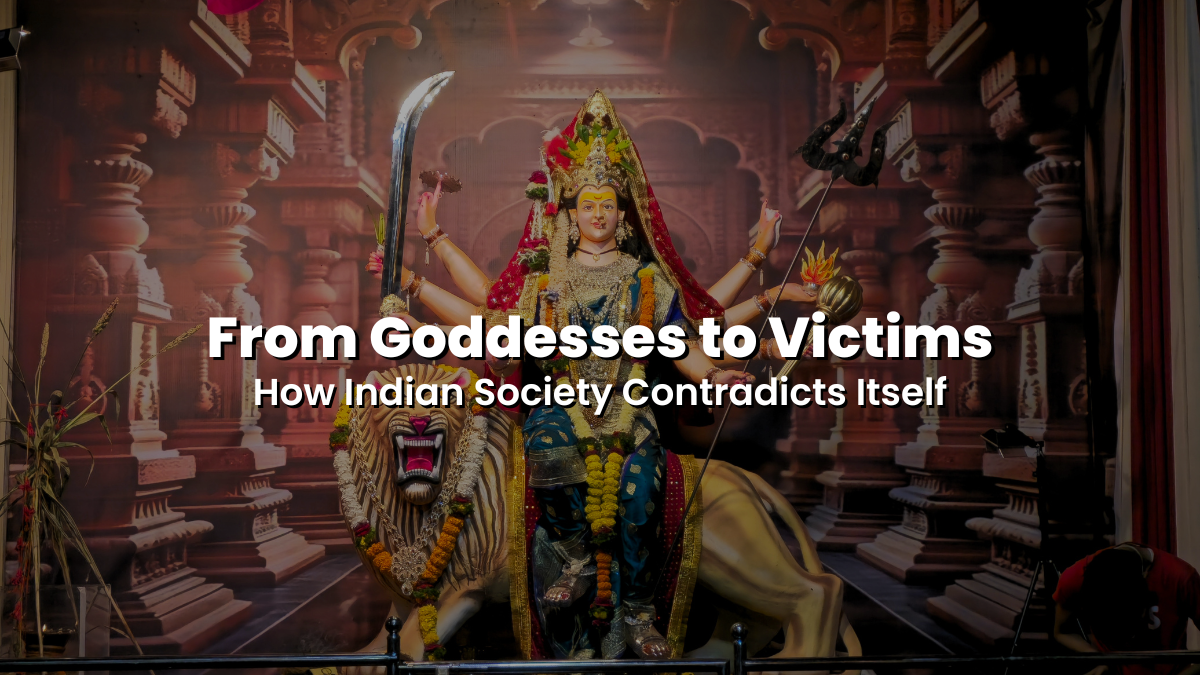
The very beginning of life starts from the womb of the mother and revolves around mother nature, who sustains humanity from birth until the last breath. In many cultural traditions in India, nature itself is imagined as a nurturing mother, symbolized through figures such as Boomadevi, the goddess who embodies the life-giving spirit of the earth. India, known for its cultural diversity and spiritual traditions, often portrays women and womanhood with reverence through religious and cultural symbolism and mythological narratives. Many Eastern religious traditions, particularly Hinduism, reflect eco-centric values where nature is regarded as sacred and divinely embodied. However, today the symbolic reverence of women and nature stands in sharp contrast to their lived realities.
In contemporary society, modern development largely operates through an anthropocentric framework that prioritizes economic growth, profit and consumption. This shift from sacred understandings of nature to market-centered extraction reveals a deep contradiction within cultural identity, belief and practice. The same culture that reveres feminine divinity participates in marginalising women and degrading the environment.
Intertwined Exploitation of Women and Nature
The paradox between the symbolic glorification of women in harmony with nature and their lived realities reveals that cultural reverence does not translate into structural empowerment but instead sustains gendered and environmental hierarchies.
Ecofeminists argue that domination of women and domination of nature emerge from the same patriarchal logic of control, exploitation and extraction. Within this framework, cultural ecofeminism reclaims the historically constructed association between women and nature, interpreting it as a source of strength rather than subordination. It emphasizes qualities such as care, nurture and ecological sensitivity, arguing that women’s closer relationship with nature, shaped through lived experiences of harmony and traditional roles, can offer alternative, more sustainable ways of relating to the environment. In this sense, the woman–nature connection is reframed as empowering, positioning women as custodians of ecological balance and ethical coexistence. But viewed from a Marxist lens of ecofeminism, which largely talks about capitalistic oppression of women and nature, states that this constructed closeness did not empower women, rather, it paved the way for their intertwined exploitation alongside nature. Here lies the real contradiction of our religious culture and the lived reality of many women in congruence with nature, where both nature and women are experiencing disproportionate negative effects.
Similarly, patriarchy values masculine traits of dominance and power while simultaneously devaluing women’s nurturing labour and ecological knowledge (Anjum, 2020). The gendered hierarchy between men and women produces the oppression of women, just as the dualistic separation between humans and nature enables environmental exploitation. This worldview is deeply embedded in phallocentric thinking, which centers around masculine authority and portrays women and nature as passive and sacrificial. Here, the glorification of goddesses does not dismantle androcentrism; rather, it romanticizes women’s subordination. When women are glorified as self-sacrificing, their unpaid care work becomes normalised and their suffering becomes invisible. Similarly, when nature is symbolically described as mother, emotional reverence coexists with continued extraction. A gynocentric perspective (Mary Daly, 1978; Susan Griffin, 1978), however, challenges this phallocentric logic by recognizing women’s ecological knowledge, care work, and relational ethics between nature and women as central rather than marginal. Instead of reproducing hierarchical domination, gynocentrism calls for reimagining social and environmental relationships through reciprocity, sustainability, and equality, since the foundational mechanism and the very aspect of environmental sustainability and conservation start with women.
Modern Capitalism, Women and Environmental Exploitation
Modern capitalism prioritises short-term profit through the exploitative extraction of natural resources, disregarding long-term environmental and social consequences. Profit-driven industrialization with modern technologies has not only degraded the environment but also contaminated the resources it provides, manifesting in food adulteration, chemical pollution, and toxic waste, all of which disproportionately burden women. In Cuddalore’s SIPCOT industrial belt, for instance, the continuous discharge of chemical effluents into the Uppanar River has caused severe ecological contamination. The health consequences of this degradation are deeply gendered, where women bear a heightened risk of respiratory illnesses, skin disorders, eye irritation, and reproductive complications from prolonged exposure to polluted water and the marine ecosystem (Sacem, 2017).
This reflects Vandana Shiva’s concept of production and reproduction. She argues that women’s work in subsistence economies is often invisible because development models recognize only production for the market and ignore reproduction, the processes that sustain life and ecological balance (Shiva, 1988). This expresses that capitalist production exploits natural resources, while the social reproduction of women’s knowledge and subsistence production becomes invisible and undervalued. As production increases in the name of development, the burden of reproducing lives and the supply of resources intensifies among women and the environment, leading to further intensified social inequalities.
The Empirical Evidence
Across India, environmental crises magnify pre-existing gendered inequalities. The MSSRF study conducted across seven Indian states with a high heat vulnerability index in 2025 reveals that women experience disproportionate health risks during heatwaves, including fatigue and reproductive health complications (Kannan, 2025).
Gendered division of labour assigns women primary responsibility for domestic and caregiving roles, which increases their exposure to environmental hazards. This reflects a strong degree of environmental sexism, where, for instance, women disproportionately inhale toxins from daily household waste and polluted domestic environments. A study in Environment and Urbanization Asia (2014) shows that nearly 60% of deaths caused by indoor air pollution occur among women, highlighting their heightened vulnerability to household toxins.
Invariably, the article featured in the Hindu titled, ‘Smog refugee crisis: Delhi’s worsening air pollution drives young people out’ exposes that the economic potential of women is often overshadowed by expectations to assume nurturing roles. This is evident among the smog refugees from the NCR Delhi region, where women from migrant families primarily find themselves positioned as caregivers in their new settlements. Their primary responsibility becomes nurturing their children and family members, further constantly exposing them to the persistent effects of pollution and climate change that forced them to leave their previous homes (Yadavar, 2025).
Similarly, climate change–induced migration has led to the emergence of climate refugees since the early 2000s. Out-migration occurs rapidly from drought-affected regions of Tamil Nadu, including coastal districts such as Nagapattinam, Thanjavur, and Salem, into cities like Chennai. As people move away from agricultural livelihoods, they are increasingly absorbed into the urban informal sector, resulting in the expansion of a precarious and unregulated workforce in urban centers, which has contributed to rising urban homelessness in cities like Chennai (Maria Aishwarya, 2021). Climate change today is, in reality, the result of persistent environmental exploitation and degradation.
The Future
The cost borne by women and the environment is never equal to the rewards gained. Creating a sustainable and equal society demands gynocentric, holistic, multifaceted action that actively works to eliminate barriers and allows women and men to re-conceptualize the world in non-hierarchical ways. The feminist and environmental approaches should work together, as the liberation of women and of nature is seen as intimately linked. Both should progress towards an egalitarian, non-hierarchical system (Anjum, 2020). The transformation requires the retrieval of ecological wisdom embedded in religious and cultural traditions, re-evaluation of patriarchal interpretations that justify domination, and reconstruction of social systems that prioritize ecological balance and gender justice. This provides us with a critical lens which helps us understand these connections and a transformative vision for society rooted in equality, care, harmony and justice.
References:
- Anjum, T. (2020). Ecofeminism: exploitation of women and nature. International Journal of English Literature and Social Sciences, 5(4), 846–848.
- Anjum, G., & Aziz, M. (2025). Climate change and gendered vulnerability: A systematic review of women’s health. Women’s Health, 21(2025)
- Daly, M. (1978). GYN/ECOLOGY. Beacon Press.
- Dutta, S., & Banerjee, S. (2014). Exposure to Indoor Air Pollution & Women Health: The Situation in Urban India: The Situation in Urban India. Environment and Urbanization ASIA, 5(1), 131-145.
- Griffin, S. (1978). Woman and nature: The roaring inside her. New York: Harper & Row.
- Kannan, R. (2025). Women experience amplified health risks due to rising heat: MSSRF study in seven States. The Hindu.
- Maria Aishwarya, B. (2021). Migration Research with Social Science Insights. Applied Worldwide.
- Shiva, V. (1988). STAYING ALIVE (By kali for women & Zed Books Ltd.). KALI FOR WOMEN.
- Sacem. (2017). Chemical company in SIPCOT discharged effluents into the River Uppanar in Tamil Nadu – Sipcot Area – Community Environmental Monitors.
- Yadavar, S. (2025). Smog refugee crisis: Delhi’s worsening air pollution drives young people out. The Hindu.