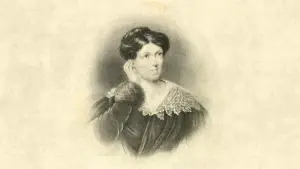
Ralph H. Turner was an influential sociologist. He served as the 60th President of the American Sociological Association and has been influential in the sociological sub-fields of Collective Behavior and Social Movements. Turner, and colleague Lewis Killian, wrote the book Collective Behavior, a book that is well cited in sociology and social psychology. In the book Turner and Killian present four types of crowds in their sociological discussion of a sociology of crowds.
The concept of “crowds” have gained a lot of attention in American society and across the globe over the past several years. Think about how many major news stories over the last decade have focused around “crowds.” The COVID-19 Pandemic and associated policies were all about avoiding crowds. The success of political gatherings has often been measured by the size of the crowds in attendance. Mass shooters rely on crowds of people to make their points through violence. Mega-celebrities like Taylor Swift have established their fame by drawing enormous crowds to concerts.
The point is, “it takes a fairly large number of people in close proximity to form a crowd” (Lofland 1993), and all of these events rely on large numbers of people showing up in a common location. So, how and why do people show up at the same place in such large groups? Hopefully, Turner and Lewis’ work can help us understand.
Sociology of Crowds: The Four Types of Crowds
We see all of these events happening in society, and it may not seem intuitive to relate events like mass shootings and Taylor Swift concerts, but with a sociological eye we can see how almost all of the major events shown in the media have something to do with crowds of people. With that said, let’s take a moment to reflect on Turner and Killian’s sociology of crowds.
1. Casual Crowds
Turner and Killian’s first type of crowd is called a casual crowd. Casual crowds consist of people who are in the same place at the same time but who aren’t really interacting. A broad example might include people standing in a line at a public office. This could also include a bunch of strangers all eating lunch in the same park. None of these people are necessarily there together, but some sort of social structure has brought these people to the same place.
In the case of people standing in a line at a public office, the structure is simply where the office is located. In the case of the people eating lunch at the park, the structure includes the location of the park as well as a common social understanding of “lunchtime.” The point is while it may seem to be a bunch of random strangers in these types of crowds, there are still elements of social control at play that bring these folks together in large groups.

2. Conventional Crowds
Turner and Killian’s second type of crowd is called conventional crowds. Conventional crowds are those who come together for a scheduled event that occurs regularly, like a religious service or a college class. This type of crowd is different because people are attending the event with a common “individualized” goal. This is to say everyone is there for a personal goal but everyone’s personal goal is similar. For a religious service that goal might be connection to a higher power, in college that goal might be getting a grade.
Conventional crowds are still brought together through social structure, though. To practice a specific religion people have to learn specific rituals and traditions, therefore they must attend a specific house of worship such as a mosque, church, or temple, in order to learn and perfect these practices.

3. Expressive Crowds
Our third type of crowd according to Turner and Killian is the expressive crowd. Expressive crowds are people who join together to express emotion. Examples of expressive crowds include weddings or funerals. These types of crowds often form as a result of people wanting to express themselves as a result of another event. For example a funeral is an event where people gather to express themselves after the passing of a loved one. Similarly, a wedding is an event for people to express themselves after they have fallen in love.
Once again social structure brings these people together. Where these people gather, how many people are at these gatherings, and how people behave at these events is all dependent upon cultural traditions. For instance many wedding services are held in religious places of worship because marriage and religion are culturally intertwined. Some funeral services may be solemn while other are celebrations, it all depends upon culture.

4. Acting Crowds
The final type of crowd according to Turner and Killian are acting crowds. Acting crowds are focused on a specific goal or action, such as a protest movement or riot. In this case the goal or action itself is the structure that brings people to these events. The goal or call to action can be established in several ways, but once it is established, it is the catalyst that brings these people together and sets the tone for the collective behavior.
For instance, news media could expose a social problem causing people to establish a goal of solving the problem. The government could make an unpopular policy decision causing people to show their displeasure through protest. Either way there is usually a common ideological goal that brings these people together into a crowd.

Final Thoughts on the Sociology of Crowds
Being in a crowd has become a common occurrence. We regularly hear about crowds in the news and we probably find ourselves in a crowd on a regular basis whether we like it or not. Despite how common crowds are in our society, we seldom hear anyone slow down and ask why are so many people gathering in common locations, or how are all these people in the same place at the same time? We just kind of take for granted that crowds are a part of life.
This is why sociology is so important—we can make the familiar unfamiliar, and the comfortable uncomfortable. We ask the hard questions and the simple questions. Often the simple questions are the hard questions, and this may be the case with the sociology of crowds. As sociologists we have to understand that crowds form as a result of social structure, and Ralph Turner and Lewis Killian give us a typology of crowds that can serve as a basis of understanding as we continue to witness crowds as a part of our modern society.