Editorial Note: This article is a part of the Stella Maris Global Sociology Series, published in partnership with Applied Worldwide.

Introduction
Environmental Sociology has profoundly reshaped the way I perceive my everyday actions, my social position, and the broader socio-cultural context in which I live. Before engaging with this discipline, consumption felt like a routine, almost everyday part of my life including the cycle of buying, discarding and repeating without much thought. Through concepts such as George Ritzer’s ‘cathedrals of consumption,’ Bauman’s ‘liquid modernity,’ Juliet Schor’s ‘cycle of working and spending’ and ‘retailtainment,’ I have come to understand how deeply consumerism is embedded in modern society and how it impacts the environment. This essay reflects on what I have learned, how my perspectives have shifted and how I can now apply these insights in my everyday life.
Consumerism and Environmental Impact
George Ritzer (1999,2007) in his idea of ‘cathedrals of consumption’ which talks about shopping malls, fast-food chains and online platforms purchasing illustrates how consumption has become ritualized and celebrated. Yet, these spaces encourage unnecessary purchases, leading to waste accumulation and environmental degradation. The concept of ‘walmartization’ highlights how global chains spread consumerist values from the west to the global south, creating uniform patterns of consumption that strain local ecosystems.
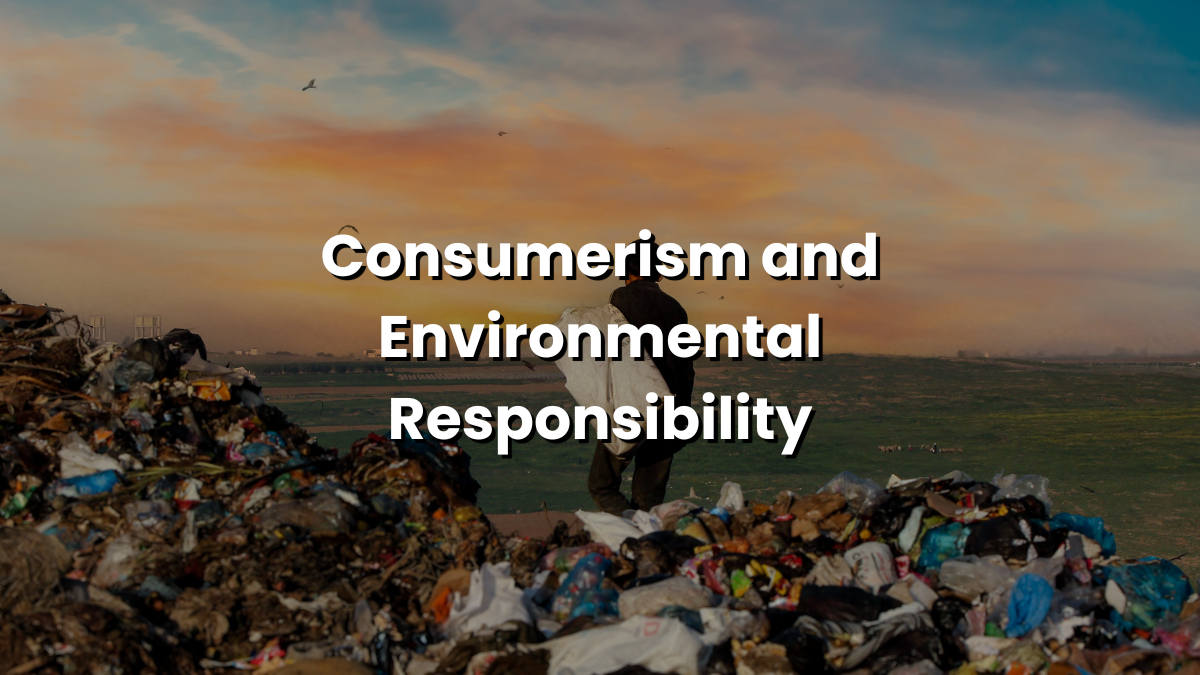
I realized that every purchase contributes to the environment, either positively or negatively. For instance, buying durables, eco-friendly products reduce waste, while subscribing to ‘discarding culture’ accelerates ecological damage. The transition from green to brown environments (natural to man-made) symbolizes how capitalism transforms landscapes which often prioritizes profit over sustainability.
Shifting Perspectives on Consumption
Initially, I was drawn to discounts, sales and the convenience of online shopping. However, environmental sociology taught me to critically evaluate these behaviors. I now recognize that consumerism is not just about individual choice but is shaped by neoliberal capitalist values that normalize over-consumption.
Bauman (2002) in his concept of ‘liquid modernity’ explains how society is in constant flux, with individuals leaning towards leisure and consumption as markers of identity. Juliet Schor (1991) explains the concept of ‘cycle of work and spend’ discusses how we unconsciously trap ourselves in a loop: working harder to earn more, only to spend excessively
and perpetuating environmental harm. Kapferer (2008) revealed how ‘retailtainment’ is consumption packaged as entertainment, making it harder to resist.
Through these insights, I began to detach myself from the allure of consumer culture. I consciously avoided unnecessary purchases, reduced online orders and resisted marketing strategies that exploit psychological triggers.
Individual Agency and Environmental Responsibility
One of the most empowering lessons from Environmental Sociology is the role of individual agency. While organizational and governmental interventions are crucial, personal choices matter significantly. I realized that protecting the environment is not only about large-scale policies but also about small, everyday decisions.
At the household level, I have adopted practices such as using fewer plastics and toxins, supporting organic farming and local produce, maintaining a smaller collection of clothing and accessories, reducing vehicle usage and exploring energies like solar power and minimizing pesticide use.
These actions may seem minor, but collectively they contribute to reducing ecological bias (the tendency to undervalue natural capital). I now appreciate nature not merely for its utility but for its intrinsic worth, deserving respect regardless of human needs.
Breaking the Vicious Cycle
This discipline has helped me to identify the vicious cycle of purchasing, consuming and discarding. Previously, I assumed the environment was a public good, endlessly available for exploitation.
Now, I understand that the global carrying capacity of nature is finite. Overconsumption reduces this capacity, threatening sustainability for future generations. By reflecting on my social position as a youth, I realized that I can resist conspicuous consumption. Instead of buying frequently, I choose to purchase only when truly necessary. This conscious restraint breaks the cycle and fosters mindful living. It also challenges the neoliberal narrative that equates happiness with material accumulation.
Reflexivity and Bias Awareness
Writing this essay required me to confront my own biases. Initially, I believed that environmental protection was primarily the responsibility of governments and corporations. Environmental Sociology challenged this assumption, showing me, how individual actions collectively shape social reality.
I also recognized my bias towards convenience which is valuing speed and accessibility over sustainability. By checking these biases, I became more aware of the hidden costs of consumerism, such as e-waste from technological products and waste accumulation in loca ecosystems. Reflexivity allowed me to critically analyze my behavior and align it with ecological values.
Socio-Cultural Context of Everyday Living
Applying these concepts in everyday life has been transformative. For example, when I choose public transport over private vehicles, I am not just saving fuel but actively resisting the culture of excessive consumption. When I reduce clothing purchases, I challenge fast fashion’s exploitative cycle. When I support organic farming, I contribute to healthier ecosystems and sustainable livelihoods.
These actions may seem personal, but they are deeply Sociological. They reflect how individual agency interacts with structural forces; how cultural values influence behavior and how reflexivity enables change. Environmental Sociology bridges the gap between theory and practice, making everyday living a site of resistance and transformation.
Broader Lessons from Environmental Sociology
This discipline has taught me several important lessons which includes how ‘consumption is cultural, not natural’ and how it is shaped by capitalist values and global systems. It taught me how ‘environmental degradation is social’ where waste, pollution and ecological decline are consequences of collective human behavior. I have learned how individual agency matters where small actions accumulate into significant impacts. One important thing I have learned is how ‘nature has its own intrinsic value’ and it must be respected beyond its utility to humans and how reflexivity is essential where understanding biases and social realities enables meaningful change.
These lessons have not only altered my behavior but has also deepened my sociological imagination. I now see the environment as intertwined with social structures, cultural norms and personal choices.
Conclusion
Engaging with Environmental Sociology has been a transformative journey. I moved from being an unconscious consumer to a reflexive individual aware of my social position and environmental responsibility. Concepts like ‘cathedrals of consumption,’ ‘liquid modernity,’ ‘retailtainment’ and ‘ecological bias ’provided the theoretical lens to analyze the behavior. Personal reflections on reducing consumption, adopting sustainable practices and checking biases grounded these theories in everyday life.
Ultimately, Environmental Sociology taught me that protecting the environment is not just about policies or organizations but it is about individuals choosing differently. By breaking the cycle of conspicuous consumption and valuing nature intrinsically, I contribute to a more sustainable future. This discipline has reshaped my worldview, making me more mindful, responsible and reflexive in my interactions with the environment.
References
- Bauman, Z. (2000). Liquid Modernity. Cambridge: Polity Press.
- Ritzer, G. (2007). Enchanting a Disenchanted World: Continuity and Change in the Cathedrals of Consumption (2nd ed.). Pine Forge Press.
- Kapferer, J. N. (2008). The New Strategic Brand Management: Creating and Sustaining Brand Equity Long Term (4th ed.). London: Kogan Page.
- Schor, J. B. (1991). The Overworked American: The Unexpected Decline of Leisure. New York: Basic Books.
Article Reviewed by: Ms. Maria Aishwarya. B, MA; MBA; PGDCFSc; SET; NET; Pursuing PhD, Assistant Professor and Head, Department of Sociology, Stella Maris College, Chennai, Tamil Nadu, India