I arrived in Santa Cruz for the Sociologists for Women in Society (SWS) Annual Leadership Retreat with a packed agenda: meetings, strategy sessions, collaborative planning, and deep discussions on equity, inclusion, and advocacy in our profession. But between workshops and evening gatherings, I carved out a few hours to visit the historic Santa Cruz Beach Boardwalk —the “Coney Island of the West.”
As a sociologist, I can’t help but people-watch, and the boardwalk offered a vibrant stage for observing the social dance of families, couples, teenagers, and tourists—all participating in what Erving Goffman might call their “presentation of self” in this colorful and slightly chaotic seaside setting.
A Democratic Space… Sort Of
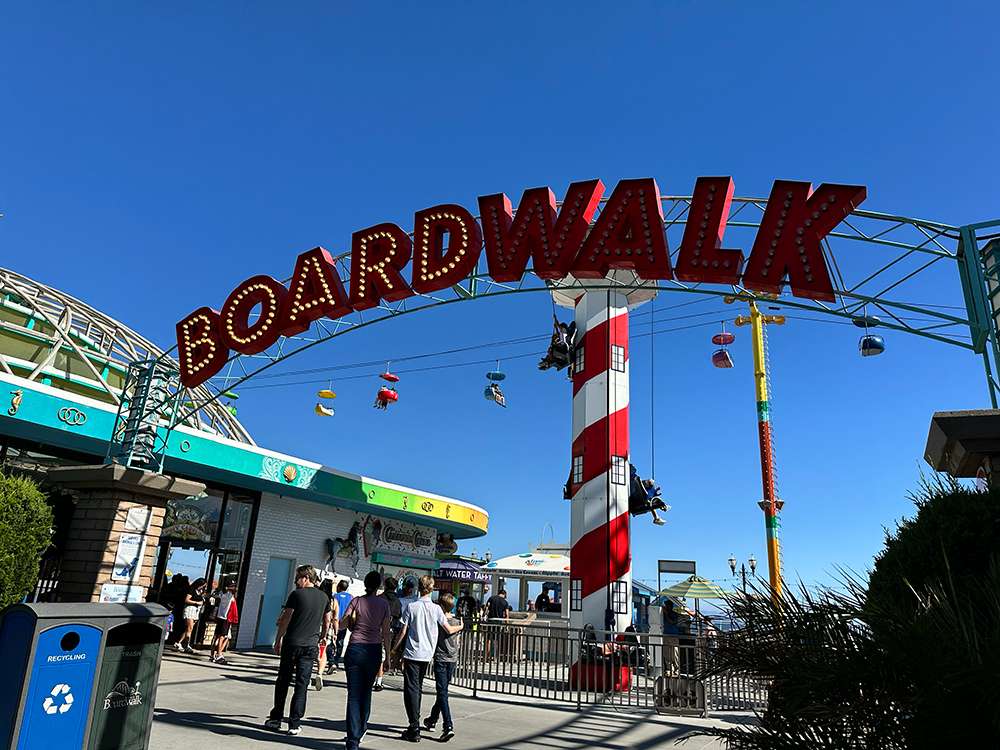
The boardwalk is free to enter—something rare among amusement destinations today—which makes it, at least on the surface, one of the more accessible leisure spaces in coastal California. I watched groups of working-class families navigate cotton candy and corn dog stands, barefoot kids darting around the beach just beyond the boardwalk, and teens in matching friend uniforms performing joy and rebellion in equal measure.
But “free” doesn’t always mean equitable. Economic stratification was surely alive and well in who bought unlimited ride wristbands versus who watched from benches. I saw parents rationing tickets, stretching $20 across a carousel ride and a shared funnel cake. I thought of Annette Lareau’s work on the unequal distribution of cultural capital—and how leisure becomes yet another arena where class is performed and reproduced.
Gender in Motion at the Santa Cruz Beach Boardwalk
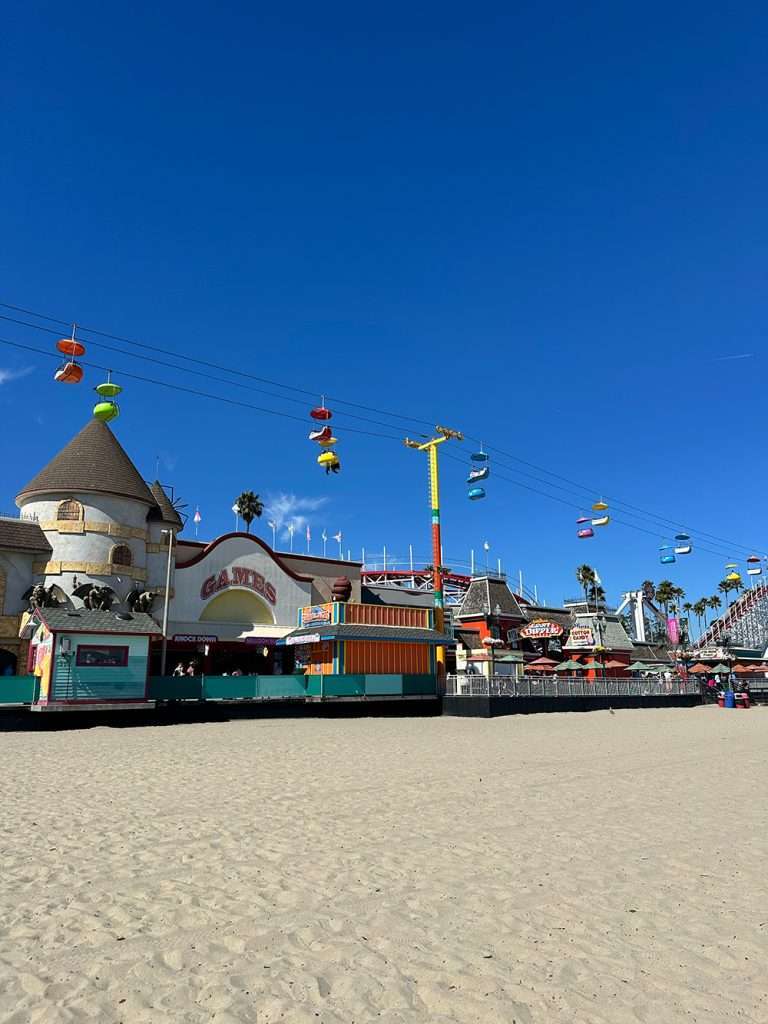
From the vantage point of a shaded bench across from the Giant Dipper roller coaster, I watched teenage girls pose for Instagram-worthy photos, giggling and coaching one another on which angle was most flattering. The boys nearby hurled basketballs at arcade hoops, louder and more physical, their bodies making a claim to space. Gender expression at the boardwalk is performative, and so much of it centers on being seen—both by your peers and by strangers in a crowd.
What’s fascinating is how these performances shift across generations. Older couples strolled slowly, hand in hand, less concerned with visibility. Mothers trailed children with practiced vigilance, their attention split between safety and keeping the day “fun.” Teenagers? They were in a different world entirely—enacting independence under the watchful eye of everyone and no one at once.
Bodies, Norms, and Belonging at the Santa Cruz Beach Boardwalk
The boardwalk is also a fascinating site for studying embodiment. Swimsuits, crop tops, and shirtless torsos were everywhere, revealing not only skin but the social pressures tied to bodily presentation. While there were moments of body positivity—groups confidently taking selfies without conforming to stereotypical beauty standards—there was also ample evidence of surveillance and self-surveillance. Women pulling down tank tops. Men flexing near the surf. Parents reminding kids to “smile for the camera.” It’s a place where people consciously, and unconsciously, police themselves and each other.
The Carnival as Counterspace?
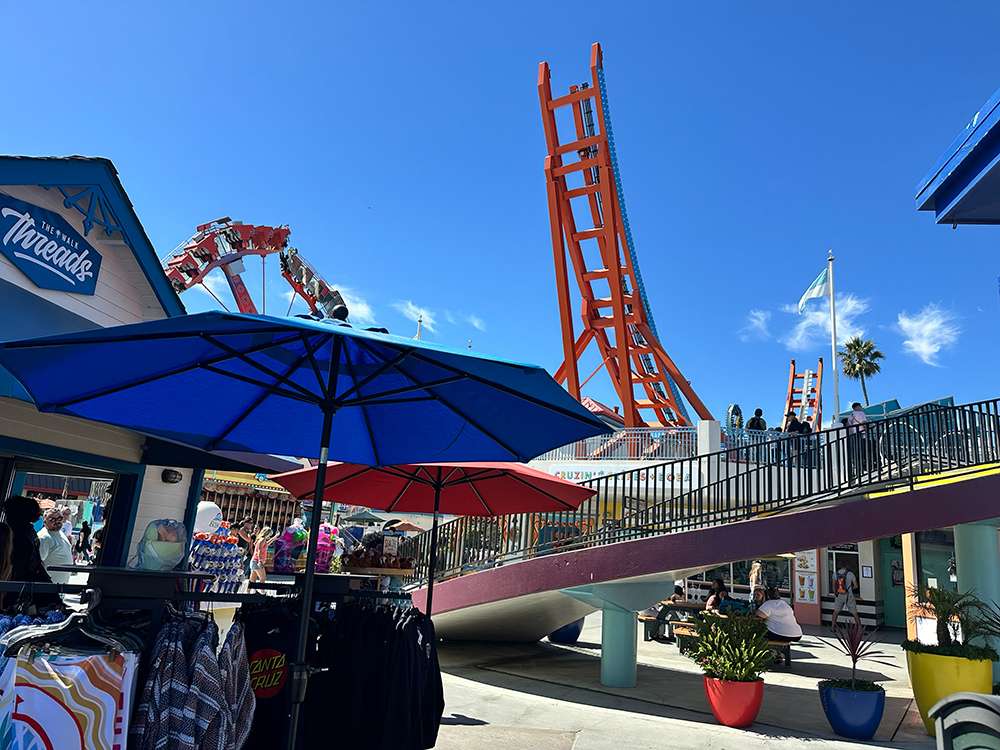
And yet, the Boardwalk is also a place of joy—messy, public, and unfiltered joy. It reminded me that even within systems of inequality and performance, people find ways to connect, escape, and express. The clanging of arcade machines, the shrieks from the roller coasters, the shared laughter of strangers waiting for kettle corn—it’s chaos, but it’s also community.
As the sun began to dip behind the horizon and the pink sky lit up the ocean waves, I paused to take it all in. This wasn’t just an amusement park—it was a living case study in culture, power, gender, and embodiment. A sociologist’s dream disguised as a carnival.
Following at the SWS retreat, these reflections felt perhaps even more pertinent. What does it mean to do sociology in public? How do we center people’s lived experiences, even in spaces deemed frivolous or leisure-focused? The boardwalk reminded me that sociology isn’t just something we do in journals or classrooms. It’s something we witness every time we step into the world and look closely.