Graduating with a sociology degree often comes with a big question: What comes next? Many students love the discipline but worry about finding meaningful work. The truth is that sociology prepares graduates for a wide range of applied, real-world careers. And those careers matter—because they help improve institutions, communities, and everyday lives.
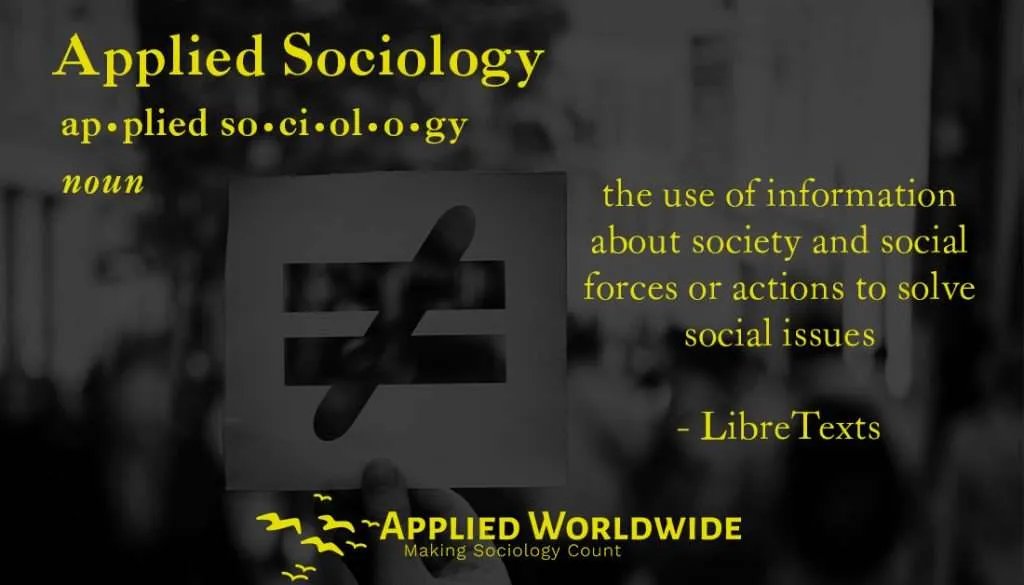
At Applied Worldwide, we define applied sociology as the use of sociological skills and knowledge to improve societal conditions, often through fulfilling jobs outside of academia. In practice, this includes roles in research, program evaluation, community engagement, policy, organizational culture, youth development, public health, and more.
This guide brings together insights from real applied sociologists featured in our Profiles in Applied & Clinical Sociology project, along with foundational skills from Introduction to Sociology by Stephanie Medley-Rath (The Sociology Coach). Together, they offer a practical, research-informed look at what sociology graduates can do next.
What Skills Do Sociology Graduates Really Have?
One of the most powerful parts of a sociology degree is the toolkit it gives you. Sociology graduates often underestimate the depth of their training, but employers value these skills more than students realize.
1. Research and Analytical Skills
You learn how to design studies, gather data, code interviews, analyze surveys, and interpret statistics. These skills are central to evaluation, policy work, marketing research, and nonprofit strategy.
2. Understanding Social Systems
Sociology teaches you how institutions, culture, norms, and inequalities shape everyday life. This systems-thinking perspective is vital for roles in public health, community development, and education.
3. Communication and Writing
Sociology majors write constantly—summaries, analyses, literature reviews, and reports. Clear communication is essential in professional settings that require presenting insights to teams, funders, clients, or community stakeholders.
4. Cultural Competency
You learn to engage with diverse groups, understand different perspectives, and recognize structural inequality. These skills are in demand in social services, education, healthcare, and organizational DEI work.
5. Evaluation and Interpretation
Many sociology courses—especially research methods and statistics—prepare students to evaluate programs, interpret data, and make evidence-based recommendations.
Together, these skills form the backbone of careers rooted in understanding people, improving systems, and supporting communities.
Career Paths for Sociology Graduates
The world of sociology careers is far broader than many students are told. Below are four major areas where sociology graduates thrive—illustrated through real applied sociologists from our Profiles project.
1. Community & Social Services
Sociology majors are a natural fit for roles supporting communities, youth, families, and marginalized groups. Many of our interviewees use sociological concepts to design programs, evaluate community needs, or support individuals navigating complex systems.
Common job titles include:
- Youth development specialist
- Community outreach coordinator
- Case manager
- Domestic violence advocate
- Program coordinator
Profiles insight:
One applied sociologist working in youth development shared that understanding socialization and community context helped them create programs that met young people where they were—emotionally, culturally, and structurally.
These roles allow graduates to apply sociological concepts directly to real-world challenges.
2. Research, Data, and Evaluation Roles
Many sociology graduates find fulfilling work in research environments—including nonprofits, universities, government agencies, and private firms. These positions rely heavily on the methods and analysis skills learned in sociology coursework.
Examples include:
- Research assistant or associate
- Evaluation specialist
- Policy analyst
- Market research analyst
- Data technician
Profiles insight:
Several applied sociologists told us that their research methods training became their most valuable professional skill. One noted, “Methods opened every door for me. It’s the skill employers don’t realize they desperately need.”
These roles often serve as stepping stones into higher-level evaluation, analytics, or program strategy work.
3. Organizational & Workplace Development
Organizations increasingly value sociologists for their ability to understand culture, norms, and human behavior in workplace environments. Sociology graduates help diagnose organizational challenges, improve employee experience, and support equity initiatives.
Roles include:
- DEI coordinator or analyst
- HR development associate
- Organizational culture specialist
- Employee engagement coordinator
- Community or stakeholder liaison
Profiles insight:
One sociologist working in organizational consulting explained that sociology “helps make invisible workplace dynamics visible,” allowing teams to function more effectively.
4. Education, Training, and Outreach
Not all sociology graduates go into formal teaching. Many work in educational organizations, college access programs, student affairs, and training roles where they help others learn, grow, and navigate institutions.
Common jobs include:
- Student success advisor
- College access coach
- Curriculum assistant
- Nonprofit educator
- Program trainer or facilitator
Profiles insight:
An applied sociologist in higher education shared that their training in social inequality helps them understand the barriers students face—and design support systems that actually work.
These roles use sociology’s strengths: understanding people and improving institutions.
What Applied Sociologists Say About Their Careers
One powerful benefit of Applied Worldwide’s Profiles project is learning directly from sociologists working in the field.
Here are a few insights paraphrased from our interviewees:
- “Understanding systems gave me the confidence to enter the nonprofit world and make sense of organizational challenges.”
- “My methods training was my ticket into evaluation work—everything I do now came from that foundation.”
- “Applied sociology lets me connect research to outcomes. I get to see the impact of my work in communities.”
- “I use theory every day—not in an academic way, but to understand why people behave the way they do.”
These comments show just how diverse and meaningful applied sociology careers can be.
How to Prepare for a Career in Applied Sociology
Here are a few steps students and new graduates can take:
1. Take Research Methods Seriously
Methods is often the most employable skill sociology graduates have.
2. Build a Portfolio or Writing Sample
Papers, reports, and case analyses can all be turned into professional samples.
3. Gain Experience Through Internships or Volunteering
Youth programs, nonprofits, community organizations, and public health outreach all provide valuable hands-on learning.
4. Connect with Applied Sociologists
Explore our Profiles project to see how others built their careers.
5. Learn Basic Evaluation Tools
Even introductory familiarity with logic models, survey design, or needs assessments will set you apart.
These steps help graduates enter the workforce with confidence and clarity.
Conclusion
Sociology offers a powerful way to understand people and improve society, and the career paths available to graduates reflect that breadth. Whether working with communities, conducting research, supporting organizations, or helping students and families navigate institutions, sociology graduates bring valuable insights into how social systems shape everyday life.
By drawing on sociological skills—research, analysis, cultural competency, communication, and systems thinking—graduates can build careers that are both meaningful and impactful. Applied sociology isn’t just an academic idea. It’s a pathway to improving real-world conditions across communities, workplaces, and institutions.