What happens when a community loses its historic places?
The answer is about more than architecture. From a sociological perspective, historic buildings are not simply old structures. They are repositories of collective memory, symbolic meaning, and community identity that help people connect personal experiences to broader local histories. In this way, historic buildings become physical reminders that communities are shaped over generations, not simply built overnight.
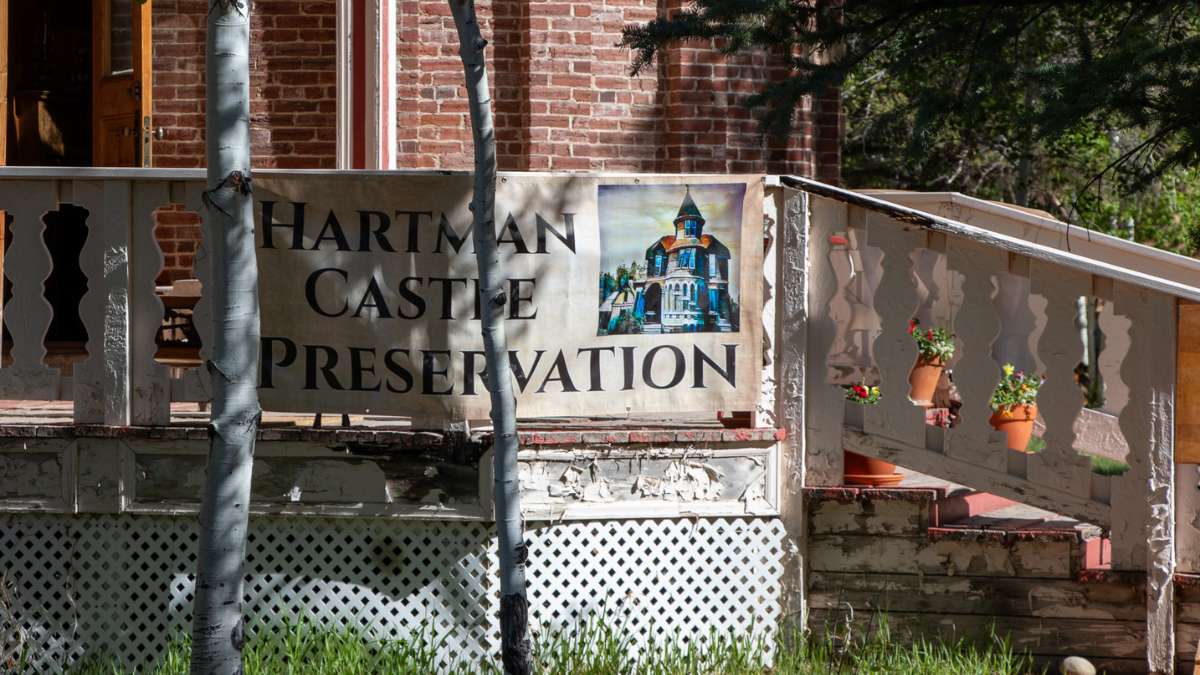
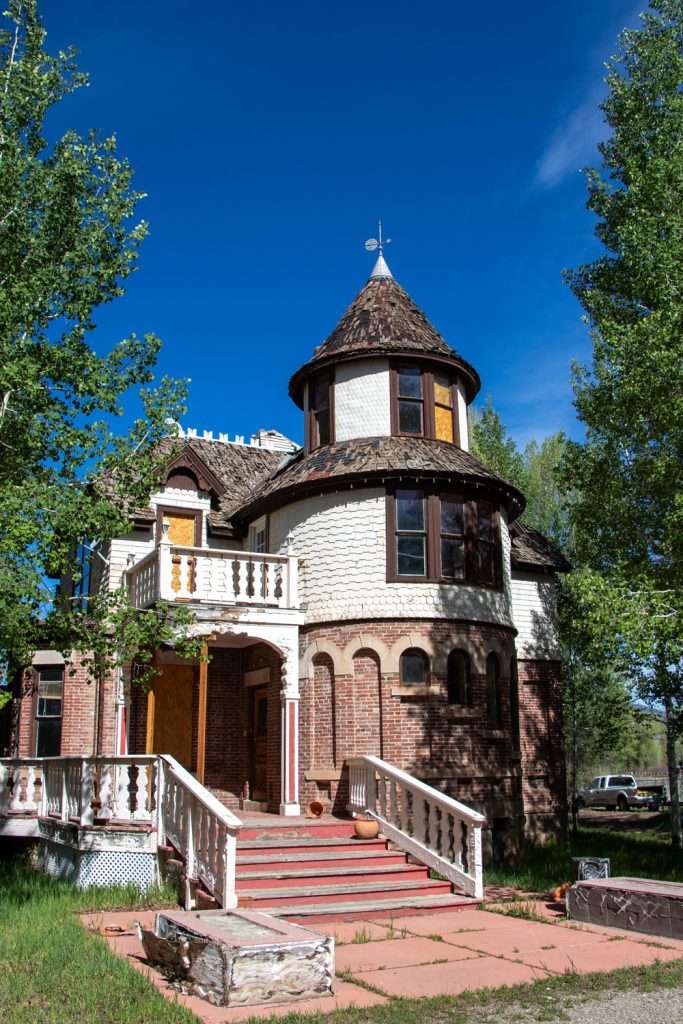
Using the historic preservation case of Hartman Castle in Gunnison, Colorado, this interview with preservationist Pamela Williams explores the sociology of place and the role preservation can play in shaping how communities make meaning of their collective history.
The Sociology of Place and Historic Preservation
When historic places disappear, communities do not only lose buildings. They risk losing stories, cultural continuity, and shared points of connection to the past. This is part of what makes historic preservation sociologically important. At Hartman Castle, preservation is about much more than restoring a landmark structure. It is also about preserving community memory, protecting local identity, and ensuring that stories which might otherwise fade are still able to be seen, shared, and experienced by future generations.
For sociologists, this connects closely to the concept of collective memory, a concept that explains the shared understanding communities develop about their past through stories, traditions, symbols, and physical spaces.
Communities remember through places. Old schools, theaters, churches, family businesses, homes, and landmarks all help anchor memory in the physical world. Without those anchors, local history can become abstract or forgotten altogether.
This process is especially significant in rural communities, where places often carry deep symbolic meaning across generations. A single structure may simultaneously represent family histories, regional heritage, economic change, local craftsmanship, civic pride, or memories of community life that no longer exist in the same way today.
Hartman Castle represents many of these layers simultaneously.
For Pam Williams, co-founder and current board president of Hartman Castle Preservation Corp., the project was never simply about preserving an old building.
“What drew me was the potential,” Williams explained. “As we lose more and more public spaces… [preserving Hartman Castle introduced] the potential to return something to Gunnison that we’ve lost.”
Her framing reflects an important sociological reality—that historic preservation often emerges when communities feel the loss of shared spaces, shared stories, or shared identity.
Historic Preservation as a Social Process
Over the years, the castle has become not only a recognizable landmark overlooking Gunnison, but also a symbol of local stewardship and shared responsibility. Through the efforts of volunteers, donors, historians, preservationists, and community advocates, the project has transformed into an example of how preservation work can strengthen social connection and public engagement.
Importantly, sociology reminds us that places do not carry meaning automatically. Through the lens of symbolic interactionism, meanings are socially constructed through interaction, storytelling, and shared interpretation. Communities collectively decide which places matter, what they symbolize, and how they should be remembered.
It is through this shared interpretation that Hartman Castle holds the potential to preserve and share forgotten stories connected to marginalized communities in the region—including prominent Black women like Susan Bryan, the women’s groups of early Gunnison, and the displacement of the Ute people who inhabited the area long before westward expansion.
Williams reflected deeply on this idea during our conversation, particularly as she discussed how incomplete many historical narratives were during the period in which she grew up.
“I was the class of ’76,” she explained, referencing the bicentennial era. “Now that we’re celebrating 250 years, [I’m] realizing that we were telling a very incomplete story.”
She described becoming increasingly aware of how Native American histories, women’s experiences, and other marginalized perspectives were often excluded from dominant narratives surrounding western settlement and American history more broadly.
“We left a lot of people out of that story,” she said.
Historic preservation projects create opportunities to revisit those omissions. For example, Williams pointed specifically to the relationships between the Hartmans and Chief Ouray and Chipeta, as well as the broader stories surrounding women’s civic organizations and political activism in early Gunnison. These narratives, she argued, reveal far more complexity than simplified frontier myths often allow.
“There are so many stories there that we still have yet to uncover,” she explained.
A place like Hartman Castle gains significance not only because of its age or architecture, but because people continue assigning meaning to it through tours, restoration efforts, storytelling, photographs, fundraising campaigns, public conversations, and personal memories connected to the site.
In this sense, preservation is also about resisting forgetting.
Remembering Through Place
Many local histories never make it into national narratives or textbooks. One example is the nearby, now-non-existent community of Iola, Colorado, which has started to, quite literally, resurface as drought conditions lower the water levels of Blue Mesa Reservoir that submerged the town decades ago. Yet, the memory of Iola remains alive through the people who once called it home.
Small communities often carry stories that are deeply meaningful locally yet largely invisible outside the region. Historic preservation can help protect these overlooked narratives by maintaining physical spaces where memory and storytelling can continue. However, without intentional preservation efforts, many of these stories risk disappearing quietly over time.
Williams emphasized that preservation work also creates opportunities for people to reconnect with their own histories and identities, even generations later. Discussing descendants of local families reconnecting through the castle project, she reflected on the importance of understanding how earlier generations shaped the present.
“You don’t really think about how [these early settlement decisions] affected your own family,” she explained while discussing her own family’s homestead history in the Midwest.
This process extends beyond Gunnison County itself. Former residents, descendants of pioneer families, and people with historical ties to the region have increasingly reconnected with the project despite living elsewhere.“It’s allowing us to create this connected community that’s far beyond Gunnison County boundaries,” Williams said.
Sociologically, this is significant because it demonstrates how places continue functioning as anchors of identity even across time and geographic distance.
The Past Can Shape a Community’s Future
Preservation projects, while seemingly focused on the past, often propel communities into the future. They generate new forms of community participation by bringing together volunteers, local governments, nonprofits, historians, business owners, artists, and residents all around a shared goal. These collaborations can strengthen social capital and deepen attachment to place while creating opportunities for intergenerational engagement.
Williams repeatedly returned to the idea that preservation work itself becomes part of community history. The effort to save Hartman Castle has required years of uncertainty, fundraising, volunteer labor, public advocacy, and persistence. When asked what kept the group moving forward despite setbacks, she laughed before answering with one word:
“Stubbornness.”
But beneath the humor was a deeper reflection about community action and collective effort.
“We didn’t know it was impossible,” she said. “So we did it anyway.”
That statement captures something important about historic preservation sociologically. Communities are not passive recipients of change. Through collective action, people actively shape what survives, what is remembered, and what future generations inherit.
Williams hopes the preservation journey itself becomes part of Hartman Castle’s legacy.
“I hope our story in saving the castle is going to be encouraging for other preservation projects,” she said.
Why Preserving Places Also Preserves Stories
One of sociology’s most important insights is that communities are built through shared meaning as much as through physical infrastructure.Historic preservation reflects this reality.
Places like Hartman Castle become important because communities collectively invest in them with memory, symbolism, and emotional attachment. They serve as reminders that local history matters and that ordinary people play an active role in shaping what communities remember.
At the same time, preservation work challenges the idea that progress always requires replacement. In an era where development often prioritizes speed, efficiency, and standardization, historic preservation insists that continuity, uniqueness, and cultural memory also carry value.For this reason, historic preservation is not only about protecting buildings from deterioration. It is also about protecting stories from disappearing.
Through the ongoing work surrounding Hartman Castle, Gunnison’s history remains visible not only in archives or photographs, but in a physical place that continues bringing people together through memory, participation, and shared stewardship.
And, perhaps that is one of the most powerful aspects of preservation work sociologically: it reminds communities that the places they choose to save often reveal what they value most about themselves.