Editorial Note:
This profile of Morgan Richards-Melamdir, PhD is brought to you by Applied Worldwide. Thank you to all those who have made valuable contributions to the Profiles in Applied & Clinical Sociology series over the years!
This profile is presented as part of a larger project with the intentions of: 1) providing students with examples of applied sociology, 2) providing market value to sociological skills and services, and 3) promoting the work of individual sociological practitioners and organizations. Enjoy our full directory of profiles in applied and clinical sociology.
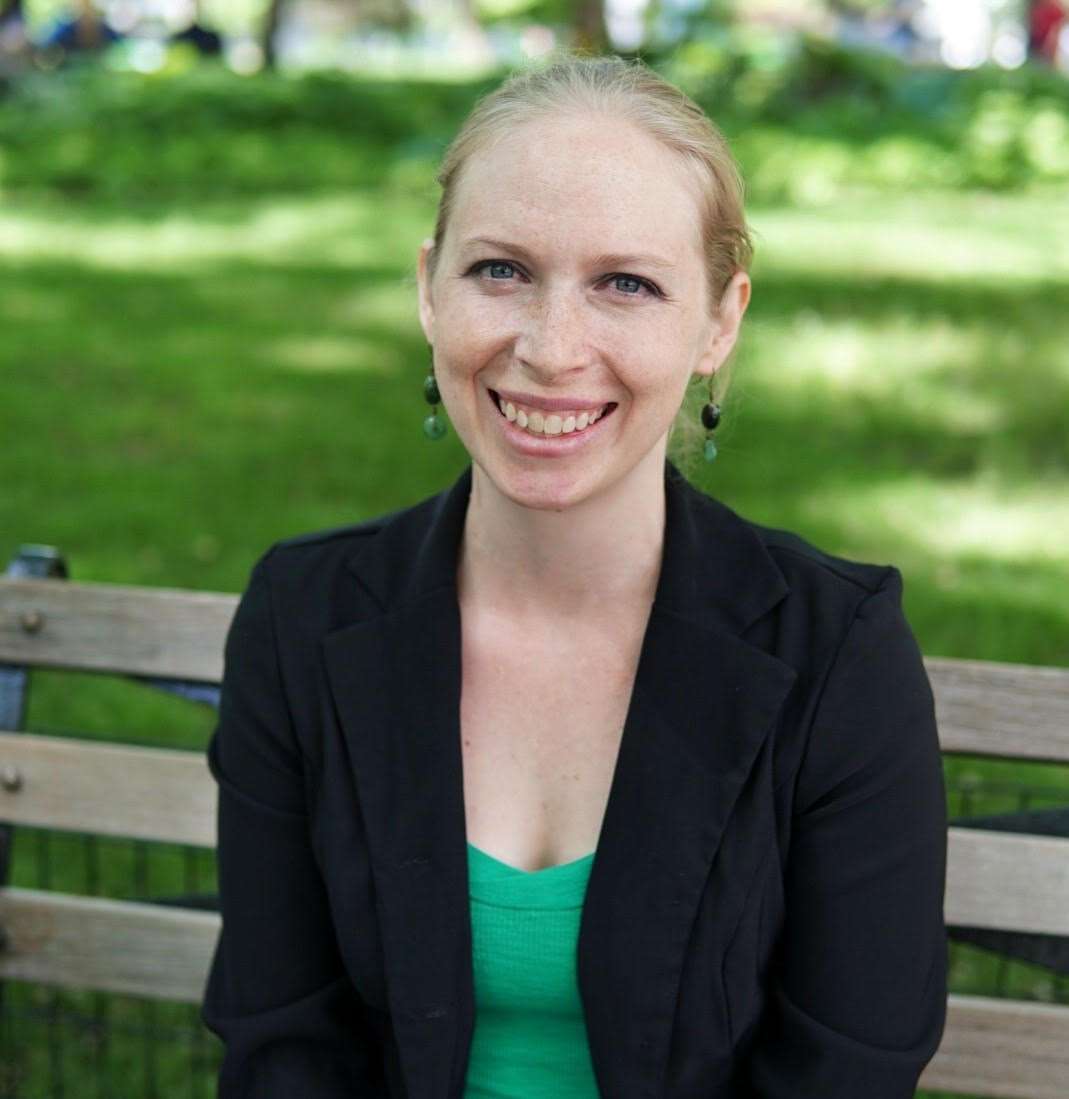
Morgan Richards-Melamdir, PhD
At Applied Worldwide, we are committed to highlighting sociologists whose careers demonstrate the power and versatility of applied and clinical sociology. In this profile, we are excited to feature Dr. Morgan Richards-Melamdir, a researcher and program evaluator whose work exemplifies sociology in action. With a professional portfolio that spans civil society organizations, NGOs, United Nations agencies, government partners, research institutions, and private-sector clients, Dr. Richards-Melamdir brings sociological expertise directly into the spaces where policy, inequality, and community well-being intersect.
Dr. Richards-Melamdir is guided by a strong academic foundation in sociology. She earned her PhD and MPhil in Sociology from the CUNY Graduate Center, an MA in Sociology from the University of Oklahoma, and a BA in Sociology with a minor in Political Science from the University of Central Oklahoma.
Specializing in gender, inequality, poverty, livelihoods, and social policy, her applied work blends rigorous research methodologies with hands-on program evaluation. She supports the full planning–monitoring–evaluation–learning cycle, developing results frameworks and strategic plans, designing indicators, collecting and analyzing project data, conducting evaluations, and facilitating learning workshops. She also produces bespoke research for knowledge products and policy advocacy and is a trainer on all things data, offering courses ranging from fundamentals of data collection to advanced analysis techniques.
We are pleased to share Dr. Richards-Melamdir’s insights, experiences, and recommendations for future applied and clinical sociologists in the Q&A that follows. You can connect with her on LinkedIn.
Using Sociology in Practice
How did you establish yourself as an applied or clinical sociologist?
I started out as a volunteer abroad. Then worked internally for a small NGO, then larger NGOs. I moved into consulting about 5 years ago, which I really enjoy. I think the biggest barrier to establishing myself was at the entry-level point, where I needed to work for free, unfortunately. Challenges as my career progressed tended to be a lack of appetite for doing more interesting or advanced analysis with the data being collected. This sometimes led to a feeling of being out of touch with advances in my field.
I went back for my PhD 8 years after my MA in Sociology specifically to refresh skills and feel connected to high-quality research. Practices I am focusing on now to stay connected include going to conferences, even if I am not presenting, and local university seminars to keep my knowledge of subject matter and methods sharp. I also work to elevate the research projects I am hired for – increasing the quality of the analysis using high-quality methods. I’ve found clients appreciate this because they do not always know what level of analysis is possible and how precise estimates can get with more sophisticated techniques.
How do you use sociological research methods in practice?
The methodological toolkit of sociologists is VERY strong and diverse. I use this training constantly to conduct rigorous, mixed-methods studies. This includes designing strong surveys, facilitating agile focus group discussions that access both required and unexpected information, and analyzing data using respected software and techniques.
How do you use sociological theory in practice?
Causal thinking. I use sociological theory to help me understand “why” a program is working, or not, for example. I use theories around gender inequality and intersectionality to understand the root causes when doing reports on the status of gender inequality in this or that country. I use sociological understandings of social norms and behavior change to understand why certain strategies for creating equitable norms are or aren’t working, etc.
Lessons for Future Practitioners
What types of courses should students take in preparation for a career similar to yours?
Take all the methods courses you can. I cannot emphasize enough that SKILLS are what you can sell first and foremost. If you can take a research management class for the logistics of how research needs to be organized and managed, that is even better.
What types of experiences should undergraduate students seek in preparation for a career similar to yours?
Internships—every summer. This was really helpful for me in understanding what work looks like and building references for myself.
What types of experiences should graduate students seek in preparation for a career similar to yours?
Part time consulting work and research assistantships. DO the work of research as often as possible. Look for opportunities to manage or lead as well, even on the small-scale, to grow skills related to the logistics of managing people and processes related to research.
How would you describe the daily life of an applied or clinical sociologist?
There are WAY more logistical tasks involved than you would think. You need to know how much it costs to collect data, how long it will take, how many people are needed, how much of a transportation reimbursement to give to participants, etc. There’s also conducting interviews, writing quantitative analysis code, coding documents in Atlas.ti, and writing up findings. But, be really prepared to be good at project management, because most of applied research is project management. Also, it wouldn’t hurt to be really, really good at grant writing.
What advice do you have for aspiring applied and clinical sociologists?
Academia is designed not to open doors into the applied world. It also doesn’t offer a lot in the way of practical preparation for what applied work looks like (e.g., tons of logistics, business development, networking). Get to know the people who do the work you think is interesting. Do informational interviews. Find out what subject matter you really, really like (what is your true North) and spend a ton of time getting to know the entities who implement projects related to your true North.
If you know your “industry” well, you can find the opportunities that are a good fit for you. This will make you really happy and help you cope with the less fun parts of the applied work process. Learn as much as you can in degree programs. Get an incredible methodological tool kit. Figure out what subject matter lights you up. Then find your people (the ones also doing this work) and find your place with them.