Editorial Note:
This profile of Josh Packard, PhD is brought to you through a joint collaboration between Applied Worldwide and the Association for Applied and Clinical Sociology (AACS). Thank you to AACS and all those who made valuable contributions to the Profiles in Applied & Clinical Sociology series.
This profile is presented with the intentions of: 1) providing students with examples of applied sociology, 2) providing market value to sociological skills and services, and 3) promoting the work of individual sociological practitioners and organizations. You can learn more about AACS at AACSnet.net.
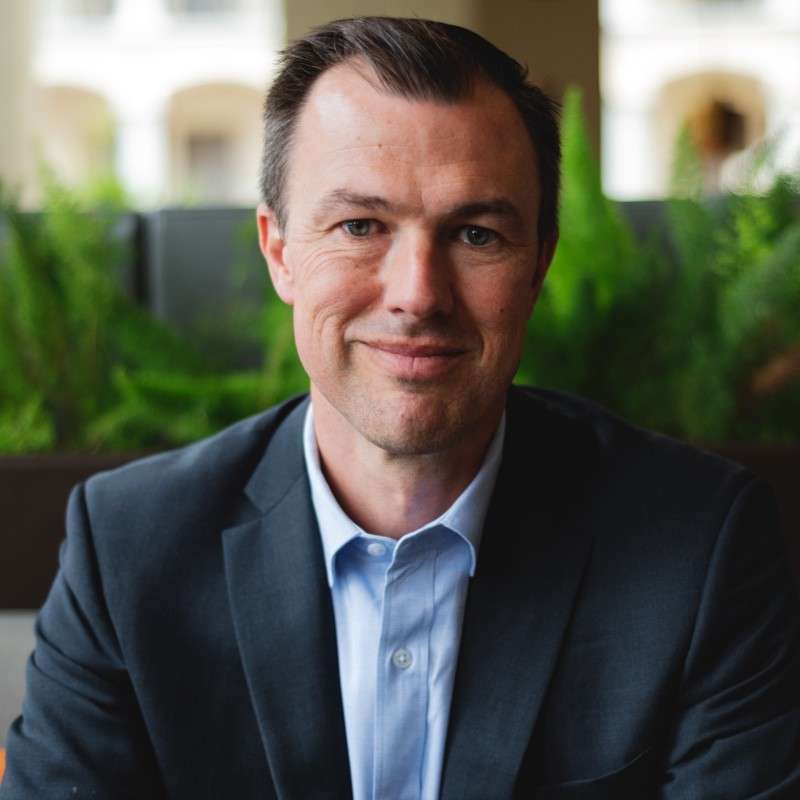
Josh Packard, PhD
Dr. Josh Packard is an applied sociologist whose work is grounded in closing the gap between what research reveals about people’s spiritual lives and how organizations respond in practice. Trained as a sociologist with a BA in English from Texas Lutheran University and a PhD in Sociology from Vanderbilt University, his career has spanned both academia and nonprofit leadership, culminating in his current role as co-founder of Future of Faith.
At Future of Faith, Dr. Packard leads applied research, develops tools and resources, and consults with faith-based organizations seeking to better understand the communities they serve. While his work takes many forms—from national studies to one-on-one conversations—it is unified by a central question: “what does the evidence actually tell us, and how do we build organizations worthy of the trust people are hungry to give?” In a broader social context marked by declining institutional trust, he sees applied sociology as having “a distinctive and urgent role to play.”
This orientation toward meaningful, real-world impact also shapes how Dr. Packard thinks about the skills required for applied sociological work. He emphasizes the importance of translating rigorous research into accessible insights, maintaining genuine curiosity about people’s lived experiences, and developing methodological flexibility across both qualitative and quantitative approaches. Above all, his perspective highlights a practitioner-focused mindset—one centered not on extracting data, but on understanding people well enough to be genuinely useful to them.
As Dr. Packard put it, his work is “varied in form but consistent in focus.” Continue reading below for more insights on Dr. Packard’s applied sociological career.
Using Sociology in Practice
How did you establish yourself as an applied sociologist?
I came to sociology as a first-generation college student, which meant I spent a lot of my early career learning things my peers seemed to already know: how institutions work, how to read a room, how to ask for things. That was its own education, and honestly it made me a better sociologist. When you have not inherited the assumptions of an institution, you tend to notice them more clearly.
For a long time, the only job I ever imagined doing was being an academic. I loved the work genuinely. Teaching, researching, writing. I was not running from higher education when things started to shift. I was simply getting curious about whether the questions I cared about could reach more people and have more direct impact outside a classroom.
The challenge was that academia does not prepare you for that pivot. The entire culture points toward one destination, and anything else can feel like failure. It took me a while to reframe the question from “what am I leaving?” to “what am I building toward?”
What helped most was tenure. The security it provided gave me a long enough runway to try things, to say yes to consulting projects and speaking invitations and nonprofit board seats, without betting everything on a single leap. By the time I fully transitioned, the path was already worn in. It was less a jump and more a walk across a bridge I had been quietly building for years. I tried a LOT of things that failed over the years, but you only need one or two things that “work” to make you a success.
If I could offer one thing to aspiring applied sociologists still inside the academy: use whatever security you have to get your hands dirty early. The transition gets a lot less scary once you realize the skills translate beautifully.
In general, how do you use sociology in practice?
The most honest answer is that sociology gave me a way of seeing before it gave me a set of tools, and that is still mostly how I use it.
The formal tools matter, of course. Research design, sampling, interview methodology, analysis, all of it gets deployed regularly in our work. But what I reach for first is the sociological habit of asking why something that feels personal is actually structural, or why something that looks chaotic actually has a pattern. That instinct turns out to be extraordinarily useful when you are sitting with an organization that is struggling and cannot quite name the reason.
In practice, that means I spend a lot of time helping leaders and organizations reframe the questions they are asking. A denomination that thinks it has a young people problem usually has a listening problem. A nonprofit that thinks it has a communications problem usually has a trust problem. Sociology helps you see upstream of the symptom to the actual dynamic at work.
From there, the tools follow. We design research to surface what people are actually experiencing. We build listening instruments that help organizations hear what they have been missing. We evaluate programs not just for outcomes but for the relational and cultural conditions that make outcomes possible.
At its core, I use sociology the way I think it was always meant to be used: to help people understand each other better, so they can build something worth belonging to.
Another way of thinking about it is that sociology is kind of our market differentiator even if people don’t always know (or care) that that’s what they’re buying. They just know that they appreciate that we think differently than others.
How do you use sociological research methods in practice?
Almost everything we do is mixed methods, and I mean that as a genuine conviction rather than a hedge. Quantitative data tells you the shape of something. Qualitative data tells you what it feels like from the inside. You need both if you want to actually understand what is happening in a community and say something useful about it.
In practice, that means a typical project might begin with a survey to establish patterns and scale, move into interviews or focus groups to understand the texture behind the numbers, and then involve some form of collaborative sense-making with the people we studied before we ever write a word of findings. That last step is often skipped in traditional research and it is almost always where the most important insights emerge.
We also design what we call sacred listening tools: custom instruments that organizations can use themselves to hear their own communities more systematically. That work draws on survey methodology, interview design, and ethnographic sensibility all at once, and it has become one of the most distinctive things we do. The goal is not just to produce a report but to build an organization’s capacity to keep listening long after we are gone.
And then there is the translation layer, which I think of as a method in its own right. Taking a finding from a dataset and rendering it in a way that a board of directors or a group of pastors can act on requires its own discipline and craft. We spend as much time on that as we do on the analysis itself.
How do you use sociological theory in practice?
The most practical thing sociological theory does for me is keep me from getting lost in the particular.
When you work closely with organizations, there is constant pressure to treat every data point as definitive and every community’s experience as unique. And those things matter. But theory is what lets you step back and stitch individual findings and experiences together into a narrative that is larger and more durable than any single case. It is the difference between telling an organization what you found and offering them a framework for understanding why it is happening and what it means for where they are headed.
In practice, that means the theoretical grounding underneath our work is often invisible to clients, but they feel its effects. It is what allows us to take findings from a congregation in rural Minnesota and a parachurch organization in Houston and a seminary in New England and say something coherent that speaks to all three. It is what transforms a research report from a snapshot into a strategic asset.
That is ultimately what I think applied sociologists can offer that pure consultants or data analysts cannot: not just what is happening, but a way of making sense of it that can guide immediate action and inform long term thinking. Theory is the scaffolding that makes that possible.
Lessons for Future Practitioners
What types of courses should undergraduate students take in preparation for a career in your type of practice?
Take every research methods course your department offers, qualitative and quantitative both. Methodological range is not optional in applied work, and the earlier you get comfortable with the full toolkit, the better.
Beyond that, I would prioritize courses that force you to write for non-academic audiences: science communication, public sociology, journalism, even rhetoric. Whatever gets you practicing translation.
And then take at least one course well outside sociology entirely. Organizational behavior, nonprofit management, theology, public health. Applied sociologists work at intersections, and the students who thrive are the ones who can speak more than one disciplinary language.
What types of experiences should undergraduate students seek in preparation for a career in your type of practice?
The advice I give most often is to get your hands dirty before you feel ready.
The instinct in academic culture is to prepare thoroughly before doing anything, to take more methods courses, finish more readings, wait for the right opportunity. Resist that. The most valuable experiences I had as an undergraduate and graduate student were the ones where I was slightly in over my head doing actual work in actual organizations, not simulating it in a classroom.
So seek out internships and volunteer roles with nonprofits, community organizations, or research shops where real decisions get made with real data. Offer to help someone analyze something. Find a faculty member doing applied work and ask if you can carry their bags. Say yes before you feel qualified.
Beyond that, I would say three things specifically. Learn to write for people who are not sociologists, and practice it constantly. Read widely outside your discipline, because the most useful theoretical tools I have borrowed from other fields. And spend time in communities that are different from your own, not as a researcher with a clipboard but as a genuine participant, because the empathetic instinct that makes for great applied work gets built through relationships, not coursework.
The through line in all of it is this: applied sociology is fundamentally about being useful to people who are trying to do something hard. The earlier you start orienting yourself toward that, rather than toward impressing your professors or padding a CV, the better positioned you will be.
What texts or authors can people reference to learn more about the type of work you do?
The most direct window into my work is my recent book Faithful Futures: Sacred Tools for Engaging Emerging Generations (Baker Academic, 2025), which lays out both the research and the practical tools we have developed for faith communities. For an earlier look at how I use sociology to understand why people disengage from institutions, Church Refugees (Group Publishing, 2015) still holds up well, and Stuck: How Clergy Are Alienated from Their Calling, Congregation, and Career (Fortress Press, 2022) applies the same lens to organizational and vocational dynamics in religious institutions. These give a sense of what the end product looks like across both academic and applied audiences.
For a broader grounding in what it means to practice applied sociology, I would point people to Michael Burawoy’s foundational essay “For Public Sociology,” C. Wright Mills’ The Sociological Imagination for the core intellectual disposition the work demands, and Hartmut Rosa’s Resonance for a theoretical framework that translates surprisingly well into organizational and community practice. And honestly, the Association for Applied and Clinical Sociology’s Journal of Applied Social Science is an underused resource for seeing the range of what this kind of work can look like in the wild.
What advice do you have for aspiring applied and clinical sociologists?
Three things:
- Get useful before you feel ready. The credentialing instinct in academic culture is strong, and it will tell you to wait until you know more, have more experience, hold a better title. Do not listen to it. Find something real to contribute to and start contributing,
- Learn to communicate outside your discipline. The most important skill in applied sociology is not analysis, it is translation. If you can take a complex finding and make someone feel it, act on it, care about it, you will never struggle to find work.
- And stay genuinely curious about people, not just about data. The researchers I have watched thrive over long careers are the ones who still find actual humans endlessly interesting. The ones who burned out usually started relating to communities as problems to be solved rather than people to be understood. That distinction sounds small. It is not.