Editorial Note:
This profile of Augie Diana, PhD is brought to you by Applied Worldwide. Thank you to all those who have made valuable contributions to the Profiles in Applied & Clinical Sociology series over the years!
This profile is presented as part of a larger project with the intentions of: 1) providing students with examples of applied sociology, 2) providing market value to sociological skills and services, and 3) promoting the work of individual sociological practitioners and organizations. Enjoy our full directory of profiles in applied and clinical sociology.
Augie Diana, PhD
At Applied Worldwide, we highlight sociologists whose careers showcase the breadth of opportunities available beyond academia. Today, we are pleased to feature Augie Diana, PhD, a retired sociologist whose multi-sector career reflects decades of applied research, evaluation, and public service across university research, state government, a small social research business, and federal leadership.
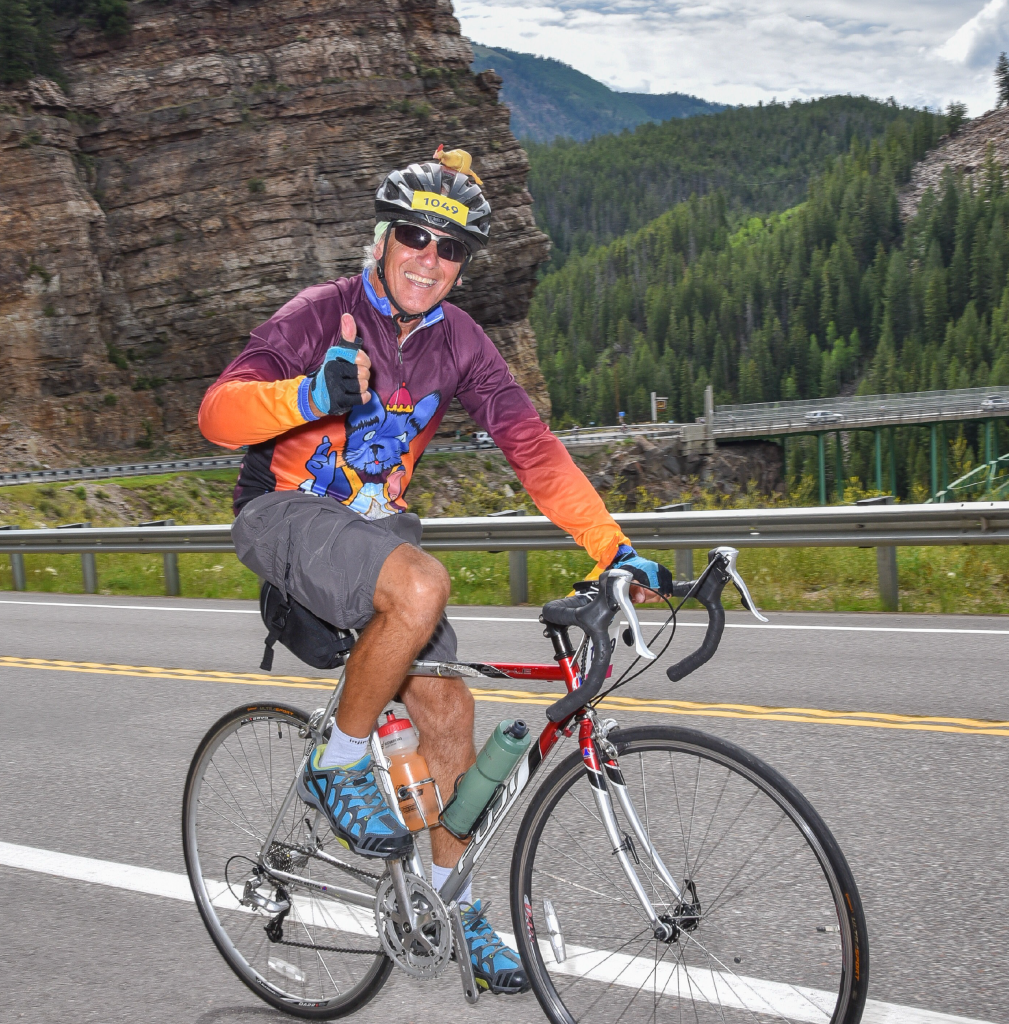
Dr. Diana earned his BA, MA, and PhD in Sociology, supplemented throughout his career by professional trainings and certifications during his tenure in the federal government. His path in applied sociology includes work at a university research center, the Massachusetts Department of Mental Health, a social-research small business (OMNI Research and Training), and two federal agencies within the U.S. Department of Health and Human Services—SAMHSA and the National Institutes of Health. Across these roles, he designed and conducted research and evaluation studies, oversaw state and federal contracts and grants, and advised organizations on strengthening research proposals and program design.
A hallmark of Dr. Diana’s career has been his commitment to participatory research. He has trained community members to conduct focus groups, facilitated collaborative qualitative data collection, and worked directly with community partners to interpret and report findings. Whether advising nonprofit clients, guiding small businesses through grant writing, or presenting research portfolios to federal leadership, Dr. Diana consistently used sociology to highlight the importance of social context, especially in fields dominated by other disciplines—such as engineering, psychology, medicine, and technology.
Dr. Diana was more often than not the only professional in a room offering a sociological perspective. He describes this not as a challenge, but as an opportunity—one that allowed him to introduce sociological thinking in environments where it was deeply needed and often warmly received. As he put it:
When it was clear that emphasizing the social context was important—often true—I didn’t hesitate to do so. Because I didn’t force the issue, I found the groups were usually receptive to the perspective I introduced.
We are excited to share Dr. Diana’s reflections on his career, his advice for future applied sociologists, and his insights on what it means to bring sociological perspective into diverse professional spaces. Please continue reading below for our full interview with Dr. Augie Diana. You can connect with him on LinkedIn.
Using Sociology in Practice
In general, how do you use sociology in practice?
Highlighting the social context at every available opportunity. For example, a number of grantees I advised were designing technological medical products for use by patients and/or healthcare staff. Often, they were convinced that developing a product was a guarantee that the customer base would come running. Part of my job was to inject realism into their commercial planning and how the research study could be enhanced by a better understanding of the social environment they were facing.
How do you use sociological research methods in practice?
I used a wide range of methodological and statistical techniques, all of which I learned in graduate school. These included use of secondary/archival data (called epidemiological data by most fields), design and conduct of focus groups (very popular with local community groups because they engage the communities and clearly value the community voice), interview design and implementation, quantitative/statistical analysis, and reporting of all kinds of data.
Lessons for Future Practitioners
What types of courses should undergraduate students take in preparation for a career similar to yours?
What is typically taught is usually good to give undergrads a grounding in basic research concepts. A place where I believe Sociology Departments fall down is in having students utilize a “safe” dataset that is readily available (e.g., NORC survey data). A better use of the research requirement would be to ask students to design and conduct a “live” study in the field. This would not have to be very sophisticated or extensive but would help students to better understand what it means to implement a research study in the real world.
What types of courses should graduate students take in preparation for a career similar to yours?
Less traditional research methods courses. Evaluation research is a great hands-on approach that is typically not given enough attention in Sociology Departments. Also, many fields make better use of statistical measurement techniques (e.g., factor analysis), cross-site study designs, and power analysis.
What types of experiences should undergraduate students seek in preparation for a career similar to yours?
I worked as a research assistant at a university research center which gave me an invaluable introduction to research, data analysis and interpretation on a series of real studies—e.g., the impact of gun laws on violent crime, bias in administration of the death penalty. I would strongly encourage undergrads to seek these opportunities themselves. Better still, department faculty could pre-establish these relationships and offer “free” labor to research organizations while giving students course credit.
What types of experiences should graduate students seek in preparation for a career similar to yours?
The answer to the previous question applies here as well. If it is not feasible for departments to offer these opportunities to undergrads, or even if they can, they absolutely should make this a priority for graduate students.
More generally, what are the best outlets to learn more about the work you do as an applied or clinical sociologist?
Practice-oriented journals, such as the Journal of Applied Social Science, and publications of more practice-oriented associations, such as the American Evaluation Association and the American Public Health Association.
How would you describe the daily life of an applied or clinical sociologist?
It’s like many other non-academic jobs, which require working alongside colleagues, most of whom do not share your academic training. As such, it requires knowing how and when your perspective is useful or needed. It also requires being open to the perspectives and training of others. Perhaps most important is to use your training to work well in teams and to guide leadership, not just obey leaders.
What advice do you have for aspiring applied and clinical sociologists?
Get into the non-academic job market as early as possible. Government has typically been a great avenue for social research but there are some obvious limits in those sectors these days. But, you should still try and consider contract companies and other self-defined research organizations.
It is also extremely valuable to offer your services to small non-profit groups who often are required to include research as part of their funding. These are often small-budget initiatives but having many of them can support you while giving you a wide range of research experiences.
I would also recommend taking trainings, participating in workshops wherever possible. Many of these are free. It could also be of value to gain some certifications to bolster your resume and be able to talk from a professional viewpoint when interviewing for jobs, or showing your value in the job once hired.