In many capitalist societies, no season triggers generosity quite like the winter holidays. As Christmas approaches, donations increase, volunteer sign-ups rise, and charitable messaging floods both physical and digital spaces. This pattern is so familiar that it feels natural—almost instinctive. Subsequently, the question of when to give is rarely asked. Yet, sociologically speaking, this surge in generosity is neither accidental nor biologically driven.
Instead, it reflects what sociologists and economists often describe as seasonal altruism: the socially patterned rise in charitable behavior during the Christmas season, followed by a noticeable decline during the rest of the year. Understanding seasonal altruism requires looking beyond individual goodwill and examining how media, capitalism, and cultural narratives shape when—and why—we give.
When to Give and the Influence of Media
In the weeks leading up to Christmas, advertising becomes nearly unavoidable. Online platforms, storefronts, streaming services, and inboxes all deliver variations of the same message: now is the time to give. Festive music, nostalgic imagery, and emotionally charged storytelling create an atmosphere designed to encourage spending, generosity, and participation in holiday traditions.
Over time, Christmas in many countries has shifted from a primarily religious observance to a heavily commercialized cultural event. While religious meanings persist for many people, the holiday’s dominant public presence is shaped by consumer culture. This intersection of capitalism, media, and emotion produces what is commonly referred to as the “Christmas spirit”—a feeling that generosity, kindness, and moral goodness peak in December.
From a sociological perspective, media plays a powerful role in constructing this reality. Advertising works precisely because repeated images and narratives influence how people interpret the social world. Christmas movies, commercials, and seasonal campaigns do more than entertain. They actively socialize viewers into specific ideas about generosity, success, morality, and care for others.
The Cultural Appeal of the “Good Capitalist”
One recurring narrative in Christmas media is the figure of the benevolent giver—often a wealthy or privileged character who redeems themselves through generosity. This storyline appears across classic and contemporary holiday films, where acts of giving function as moral proof of character.
Sociologically, this narrative reinforces what can be described as the myth of the “good capitalist.” The message is subtle but consistent—inequality remains intact, but generosity from those with resources makes the system feel humane. Charity becomes the emotional release valve that allows structural inequality to persist without fundamentally challenging it.
These stories shape behavior in powerful ways. Many people donate food, money, clothing, or time during the holiday season not simply because need suddenly appears in December, but because cultural cues tell us that this is when giving matters most. This pattern is learned through socialization. It is reinforced annually and rarely questioned.
Does Seasonal Altruism Define When to Give?
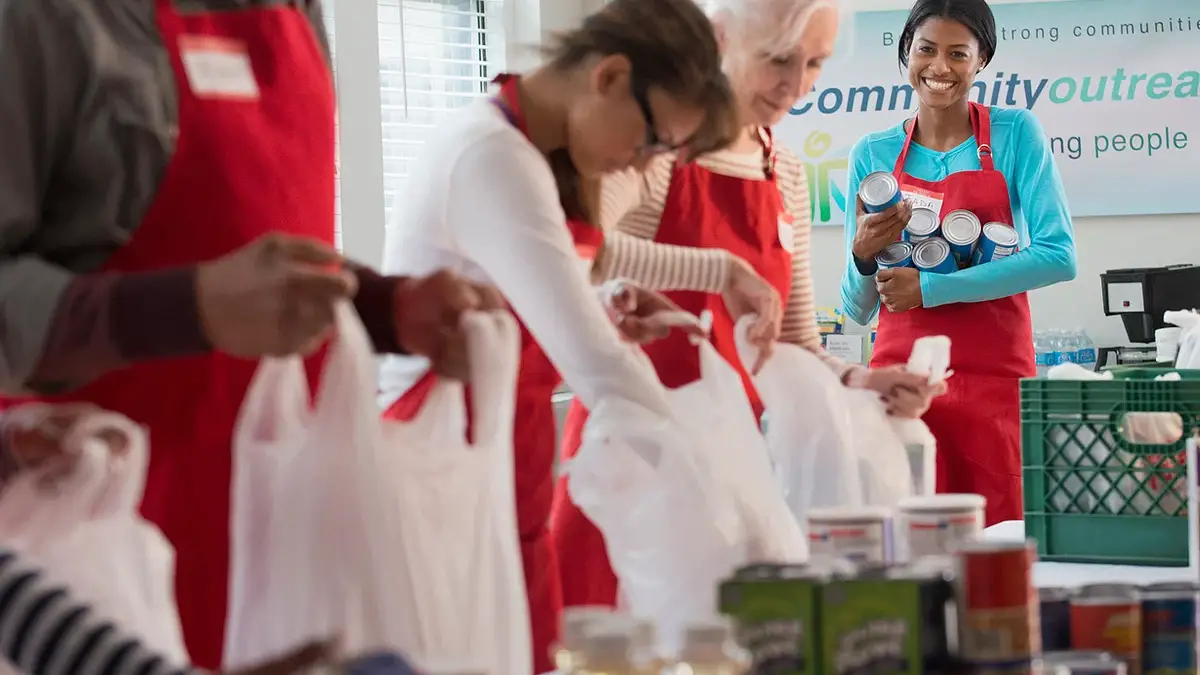
While increased holiday generosity provides real and necessary support, seasonal altruism also produces unintended consequences. Research on charitable giving consistently shows a dramatic spike in donations during December, followed by a steep drop in the months that follow. Summer, in particular, is often marked by shortages in both donations and volunteers.
This imbalance creates strain for organizations that serve people experiencing food insecurity, housing instability, and other ongoing needs. Food pantries, for example, often report their highest demand during summer months—precisely when resources are most limited. Children who rely on school meals lose access during school breaks, while volunteer availability declines as routines shift.
Seasonal altruism does not cause these problems on its own, but it intensifies them. When generosity is culturally framed as a holiday activity rather than a year-round responsibility, communities are left vulnerable once the festive season ends.
Rethinking When to Give
The challenge, then, is not to diminish holiday giving, but to rethink when to give. If media narratives teach us when to give, they can also be resisted and reimagined. Humans are not passive recipients of socialization; we have agency, reflexivity, and the capacity to act differently once patterns become visible.
Taking the “seasonal” out of seasonal altruism means recognizing that social need does not operate on a holiday calendar. Hunger, housing insecurity, and community preservation efforts persist year-round, even when they receive less attention and fewer resources.
Extending generosity beyond December requires intentional effort. It means supporting organizations consistently, volunteering when it is least convenient, and resisting the idea that care must be emotionally packaged to feel meaningful. Sociologically speaking, this shift moves altruism from symbolic performance toward sustained social responsibility.
Applied Sociology and Community Preservation
At Applied Worldwide, we think about altruism not just as an individual moral choice, but as a socially structured behavior with real consequences. One project we are especially passionate about reflects this perspective: our collaboration with the Hartman Castle Preservation Corp. in Gunnison, Colorado.
Historic preservation is often overlooked as a form of community care, yet projects like Hartman Castle support local identity, economic activity, and collective memory. These efforts require steady support, not just seasonal attention. Learning to give beyond the holidays helps sustain the places and institutions that communities rely on year after year.
Giving as a Year-Round Social Practice
Seasonal altruism reminds us that generosity is deeply social. When and how we give is shaped by culture, media, and economic systems—not just personal values. By becoming aware of these influences, we can make more intentional choices about how we support others.
The Christmas spirit does not need to disappear in January. Instead, it can serve as a reminder of our capacity for care—and a prompt to extend that care far beyond the holiday season.
Related Content from Applied Worldwide
A Sociological Look at the “War on Christmas” & Moral Panic
Symbols of Christmas through the lens of Symbolic Interactionism
The Sociology of Christmas in Nigeria: Social Solidarity
Discourse Analysis of Christmas and Santa Claus
The Sociological Imagination and Thanksgiving