Much of what people do online leaves a record. Their searches reveal what information they seek, social media interactions show how public debates unfold, and Wikipedia biographies reveal differences in whose lives are documented and how they are portrayed.
For social scientists, these records have opened up new ways to investigate society. Researchers can now examine millions of online interactions, identify patterns in public discourse, and compare digital behavior with established sources of evidence. But studies from the United States, Germany, Brazil, and Lebanon show how digital data is being used to investigate questions ranging from political polarization and social inequality to public discourse and information needs.
How Social Media Exposure Shapes Political Beliefs
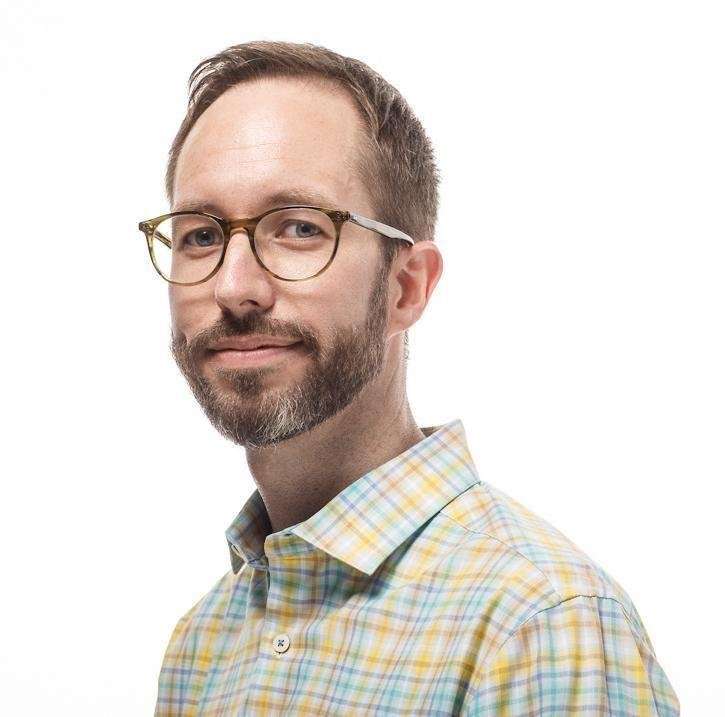
Professor of Sociology, Duke University
Would seeing more opinions from political opponents make Americans less divided? In 2017, Duke University sociologist Christopher Bail and his colleagues put that idea to the test.
The researchers recruited Democrats and Republicans who used Twitter at least three times a week. After surveying participants about their political views, they offered some financial incentives to follow automated accounts that shared messages from opposing political groups. Republicans received posts from liberal politicians and organizations, while Democrats were exposed to conservative voices. The experiment lasted one month.
The findings, published in the Proceedings of the National Academy of Sciences in 2018, challenged the assumption that exposure to opposing views necessarily reduces political divisions. Republicans assigned to follow the liberal account expressed significantly more conservative positions afterward. Democrats exposed to conservative content became slightly more liberal, although that change was not statistically significant.
The experiment did not establish that encountering opposing opinions always increases polarization. It examined a specific intervention among regular Twitter users, with varying levels of participation. Nevertheless, the results raised questions about a common proposed solution to political division: encouraging people to engage with perspectives they would not ordinarily encounter.
What Online Knowledge Reveals About Social Inequality

Professor of Applied Computational Social Science
RWTH Aachen University, Germany
Who gets a Wikipedia biography, and what determines which parts of their life are remembered? For computational social scientist Claudia Wagner and her colleagues, the answers revealed differences in how men and women are represented in one of the world’s most widely used reference sources.
In a 2016 study published in EPJ Data Science, the researchers examined Wikipedia biographies using article metadata, language analysis, and links between entries. Of the 893,380 English-language biographies with gender information in their dataset, just 15.5% were about women.
The differences went beyond numbers. Among people born since 1900, women with Wikipedia biographies tended to appear in more language editions than comparable men, even after accounting for profession and birth decade. The researchers interpreted this as evidence of a possible higher threshold for women’s inclusion, although they could not establish its cause.
They also found differences in how people were described. Biographies of women born before 1900 more frequently emphasized family and relationships, while those of men were more closely associated with politics and public roles.
The findings showed how unequal representation can affect both whose lives are documented and which aspects of those lives receive attention.
Mapping the Structure of Divided Public Conversations
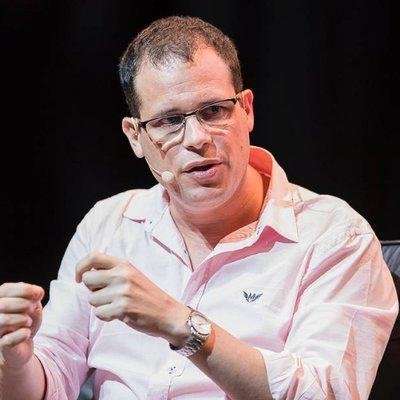
Professor, University of São Paulo, Brazil
In 2013, politically engaged Facebook users in Brazil belonged to several distinct communities. Some followed anti-corruption campaigns, others supported environmental movements, human rights organizations, or political parties. Within three years, much of that diversity had given way to two increasingly separate groups.
University of São Paulo researchers Pablo Ortellado and Márcio Moretto Ribeiro documented this shift by examining how audiences interacted with political pages. Their analysis initially identified six communities, including groups whose interests crossed ideological lines. By 2016, these had largely consolidated into progressive and conservative clusters with little overlap.
In a 2025 study published in MATRIZes, the researchers examined how such divisions could be measured over time. Facebook data traced the emergence of polarization around 2014, while Twitter data showed that the separation of political communities was firmly established by 2018 and remained relatively stable afterward.
The findings offered a way to examine political fragmentation beyond conventional opinion polling. By mapping overlapping audiences and the connections between communities, researchers could identify how once-interconnected political interests became increasingly separated. The analysis documented changes in online networks without establishing that social media itself caused Brazil’s political divisions.
Understanding Lebanon Through Digital Behavior
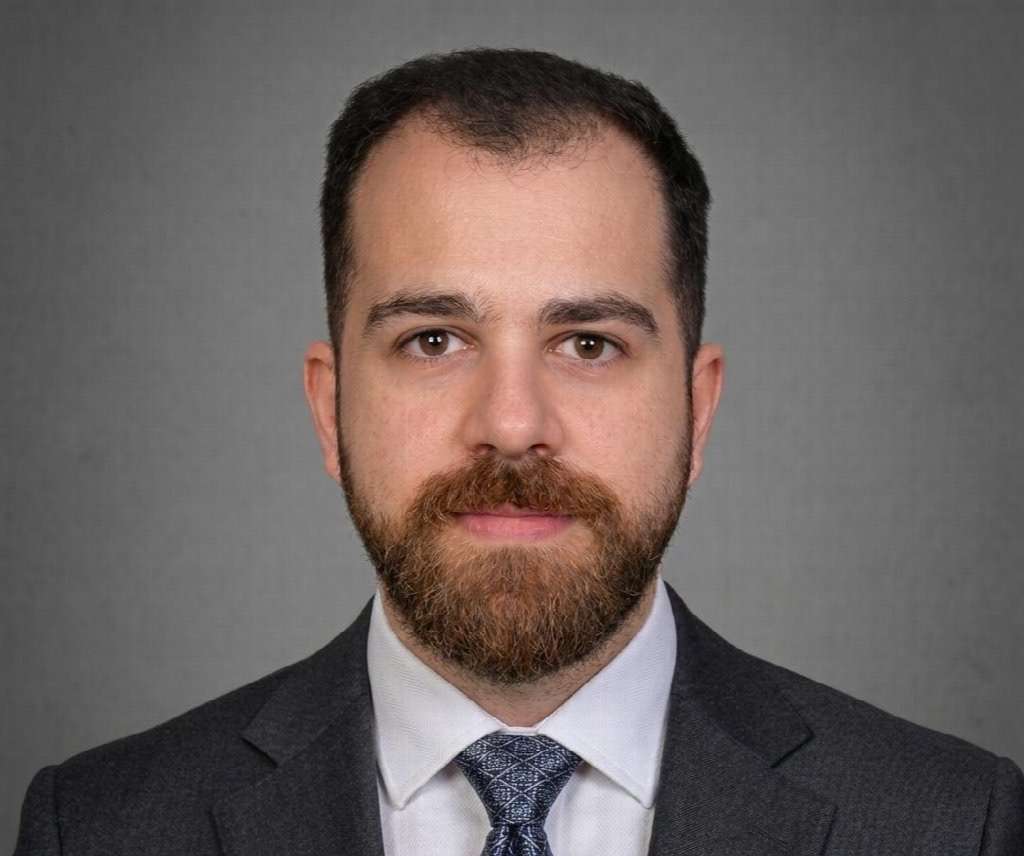
Independent Computational Researcher, Lebanon
During Lebanon’s March 2026 conflict, English-language news coverage was dominated by military developments. But searches originating inside the country showed that people were also looking for information about the economy, housing costs, and emigration.
Computational researcher Mohamed Soufan examined this difference in a study comparing news coverage with Google search interest. Using the GDELT news database, he collected 11,623 English-language articles mentioning Lebanon. After filtering and classification, 1,894 articles were included in a comparison with Google Trends data across four topics: conflict, economy, living conditions, and emigration.
The difference was substantial. Conflict accounted for 94.9% of classified news coverage but only 36.9% of measured search interest. The other three categories represented 63.1% of search interest while receiving just 5.1% of coverage. Economic topics accounted for 24.6% of the selected search interest, compared with just 0.4% of news coverage.
The imbalance persisted even after Soufan excluded the first five days of March, when fighting was particularly intense.
In a separate interview with Inside Telecom, Soufan observed that “what dominates the news does not necessarily dominate what people are trying to understand or solve in their daily lives.”
The study examined selected search topics rather than all public concerns, and its news sample was limited to English-language coverage. Still, the comparison identifies an important question for newsrooms covering conflicts: whether their reporting addresses the practical information people seek alongside the military developments dominating headlines.
What Digital Data Cannot Tell Us
A dataset containing millions of posts or searches may appear more reliable than a survey of a few thousand people. But its size does not resolve a fundamental problem: who is missing from the evidence?
People without reliable internet access leave fewer digital records. Others communicate through private channels that researchers cannot easily examine. Even on public platforms, a small number of highly active users may account for a disproportionate share of the content.
Interpreting the records presents another challenge. Searching for a subject does not necessarily indicate support for it, and sharing a political message does not always mean agreeing with its contents. Platform algorithms also influence what users encounter, complicating attempts to distinguish individual preferences from the information made available to them.
Researchers can address some of these limitations by comparing digital findings with surveys, interviews, and official statistics. They must also explain how their datasets were assembled and which populations they may exclude.
Digital evidence offers valuable access to patterns that would otherwise be difficult to observe. Its usefulness, however, depends on recognizing the difference between what online activity records and what it can reliably tell us about society.