When I was an undergraduate, I did not think deeply about the purpose of my education. I simply assumed that college follows high school, but I don’t remember any real conversations about why. I’m sure that I understood the eventual connection to a career, but at the age of 18, that eventuality seemed far away.
In the meantime, I did what I was supposed to do. I signed up for general education courses and then the classes required for my major. I completed the work required for each class and got the grades I needed to maintain a high GPA. In many of my classes, I don’t remember thinking much about what I was learning beyond those goals. Now, when I look back at my transcript, I see a lengthy list of classes in which I got good grades but about which I remember little, I’m embarrassed to say.
Now, as a professor, I want my students to have a more meaningful college education than I did. Today, students are encouraged to think about college primarily as a route to financial stability. College professors are encouraged to explain how majors, courses, and assignments will prepare students for their eventual occupation. Since students are paying more for their education than in the past, all of this is important and necessary. But it also is an unnecessarily narrow way of looking at college.
To help students to think more broadly about the purpose of education, I turn to one of Sociology’s founders, Max Weber. Weber’s typology of social action can help students investigate a variety of motivations for going to college. I hope that this investigation will inspire them to think about and treat their college classes as much more than simply a means to an end.
Weber’s Typology of Social Action: The Basics
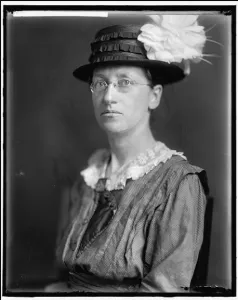
Max Weber was a German sociologist writing mostly in the early twentieth century. Weber emphasized the importance of verstehen, or understanding, in sociology. He developed a typology of social action as a means of better understanding why people do what they do. In other words, he tried to better understand what motivates people to act in certain ways.
For Weber, social action is “any action to which the actor attaches subjective meaning that takes the behavior of others into account and is oriented toward that behavior.” In other words, we engage in social action whenever we think about how others might respond to our behavior or how our behavior might impact other people—and act according to those concerns.
When it comes to higher education, students attach subjective meaning to their decision to go to college and what they do to successfully complete college. While we may sometimes treat college graduation as an individual achievement, the reality is that there are many people—seen and unseen—who shape both the meaning and reality of college.
For students, the more obvious “others” that fit Weber’s definition are their parents, teachers, peers, friends, professors, and advisors. But there are many unseen “others” whose behavior shapes their actions as well. This includes the wide variety of people working at the college, the scholars responsible for the material that students learn, and everyone involved in financial aid and grant systems, to name just a few examples.
Now that we have established that education can be analyzed as a social fact, let’s move on to Weber’s typology and how it can help students broaden their motivations for going to college.
Weber’s Typology of Social Action: Roller Coasters and College Education
Weber proposed four types of social action, two goal-oriented and two process-oriented. Rational goal-oriented actions are based either on value-rational goals or instrumental-rational goals. Process-oriented actions are about the process of doing rather than on the end goal of the action. For Weber, these social actions are either traditional or affective (emotional). Weber’s concern was that social action was increasingly directed toward instrumental-rational goals, which limits our potential to act as full human beings.
Of course, this is all very abstract, so I help my students out with more concrete examples.
Using Weber’s definition of social action, riding a roller coaster can be understood as a social action, since the meaning of riding a roller coaster is bound up with the behaviors of others. Whatever else riding a roller coaster might be, it is not typically an action done in isolation.
Bringing in Weber’s typology of social action, we can further develop the example:
Instrumental Rational Action
Weber defines instrumental rational action as social action that is oriented toward the attainment of “rationally pursued and instrumental ends.” In other words, riding the roller coaster isn’t really what matters. What matters instead is the instrumental or material ends brought about by the action.
A child riding a roller coaster because her parents have paid her to do so is engaging in a social action with an instrumental rational orientation. She could do other things to earn the same amount of money; it’s the money, not the specific action that matters. The whole point of the action is material gain.
Keep in mind, though, behaviors that lead to instrumental, material gain may be socially legitimate as in the example above. But cheating and lying can also lead to instrumental, material aims. So, when examining instrumental rational action, the morality of the action is not what matters. It only matters that instrumental ends are efficiently achieved.
When we think about college, all social actions undertaken as a means to achieve a goal (be it a certain grade, successful completion of a certain class, or the accumulation of a certain GPA) can be considered instrumentally rational actions. In class, my students easily think of additional examples to share.
Value Rational Action
Values—including a sense of morality—do come into the picture with another form of rational action. Weber defines value rational social action as consciously oriented toward the belief in a value for its own sake. Enacting the value is the goal rather than some external instrumental end to be achieved.
We might imagine that our hypothetical child is afraid to ride the roller coaster but has come to value bravery and overcoming one’s fears. She rides without any other motivation than enacting that value, something that is all the more meaningful when others are there to witness the behavior.
Again, there are other ways to enact bravery, so this is about the end-goal more than it is about the action itself. But in this case, riding the roller coaster is oriented toward values rather than being purely instrumental.
So, if someone is aiming for material gain but also values honesty and integrity, they will be limited in how they achieve their goal. Lying and cheating would not be an available route for someone with both instrumental-rational goals and the value-rational goal of integrity.
Applying this type of social action to college, we might think about the value of learning new things, of intellectual curiosity, of becoming an informed citizen, or of contributing to the broader society upon graduation. Here, we are thinking about college education as having meaning and purpose rather than simply as a means to accomplish an instrumental goal. I always enjoy hearing students brainstorm ideas about value-rational action and college education.
To understand the next two types of social action, we must move our attention from the goals of the action to the action itself. Goals are not the point here. Instead, it is the behavior or the process that matters—not what the end result of the action might be.
Affective Action
Weber defines affective social action as about the emotions inherent in the action—or how the actor is feeling. For instance, our hypothetical child might be simply experiencing the joy of the ride. She isn’t riding the roller coaster for any outcome at all but merely enjoying the exhilaration she feels. And isn’t that joy and exhilaration magnified by the others having the same experience?
Again, we need to be careful here. Affective action is not necessarily an experience of pleasant emotions. Let’s say our coaster rider instinctively is experiencing fear rather than joy. The fear in the action is also affective social action, which may also be magnified by the behaviors of others on the ride.
When we apply this to college, we might pay attention to the pleasure associated with learning new things (knowledge or skills) or the satisfaction of figuring out answers to problems. We might also think about the range of emotions that come with debating interesting topics, developing innovative ideas of our own, and feeling proud of our accomplishments. Finally, we might think about the excitement of doing these things in community with others. My students and I talk about ways to organize a classroom so that they can be immersed in the positive emotions that can be part of learning.
Traditional Action
Finally, Weber defines traditional action as determined by “ingrained habituation.” Our hypothetical child may have been riding coasters with her family going back to her earliest memories. She never asks why they do it. It’s just what they do. She looks forward to sharing this meaningful tradition with her own children.
But, again, we need to be careful. Traditional action can be much more mundane than family tradition. Any habitual action can work here – having a cup of coffee every morning or collapsing on the couch to watch tv after work or school counts. Our roller coaster rider might not be acting on family tradition. Instead, she rides roller coasters each summer for no particular reason at all. It’s just been part of her summer activities forever. Who knows why or where it started?
When we think about college, this one gets interesting. We might pay attention to traditions of college graduation in families or communities in which going to college is not a question of “whether” but of “where” (and possibly not even that). We might also investigate the origins of a wide variety of college traditions. Where did the system of majors and minors come from? Why do we have the four-year sequence? What is the origin of terms like “freshman” and “sophomore”? Why do we wear caps and gowns at graduation? How did traditions like homecoming start? Sociology is excellent for inquiries like these.
Too Much Rationality?
Weber’s concern about contemporary Western societies was that the developing social structure and culture encouraged instrumental rational action, often to the exclusion of the types of social action. He worried that aspects of humanity related to traditions, emotions, and values were getting lost in an increasingly rational and bureaucratic society. More and more, he saw society—and people—as losing the magic and mysticism that gives life meaning.
My concerns about the societal emphasis on instrumental-rational goals in education maps onto Weber’s concerns. So much about learning is magical. As children, we all know this when we are asking “why?” about anything and everything. We only begin to think about learning in instrumental-rational ways when we are put into systems that encourage this way of thinking.
When we think about education as contributing to a sense of purpose and as a process that can bring about positive emotions, it starts to look much different from when it is merely a means to an end. This is what I hope to impress upon my students.
Using Weber’s typology of social action as a guide, my students and I discuss what we miss when we think about education in only instrumental-rational ways. I encourage them to pay more attention to values, emotions, and traditions that might help them get more meaning and joy out of their classes. I highlight that meaning is typically found in communities rather than in isolation. Given how much time and energy they will spend on their classes, I ask them to think about what they will miss if they focus only on their end goals.
At the same time, we discuss the pressures toward instrumental-rational thinking about education. Today’s students are looking at high price tags for higher education, which often results in quite a lot of debt. They are often working at the same time they are going to school—and not just for fun money. Many scholarships require certain course loads and the maintenance of certain GPAs. Finding good employment after college is often a necessity, especially when they do not have family able to support them as they get on their feet.
As a sociologist, I acknowledge the cultural and structural realities in which students live their lives.
Most of them don’t have the luxury of letting instrumental goals go. So, they need to find a way to balance the need for instrumental-rational action with actions that allow for a fuller experience of education—and I do my best to help them figure this out.
At the same time, I encourage students to think about how we, as a society, can work toward a system more conducive to that fuller experience. And I urge them to be a part of the kind of change they would like to see.
Conclusion
In 1917, Max Weber spoke to German graduate students in the sciences at Munich University as part of a lecture series on vocation. At that time, World War I was in full swing and the future of these students was uncertain. He advised them that a career in the sciences and financial success was not a guarantee. He warned them that the path would be difficult and it was up to them to find meaning in what they did, regardless of the outcome. No professor or university could do it for them. This talk became “Science as a Vocation,” first published in 1919.
The situation in Germany in 1917 was different than the situation in the United States today, but undergraduates are currently facing an uncertain job market in an uncertain economy. They believe that higher education is the path toward career and a better chance of financial stability, and while research bears this out, students are well aware that there are no guarantees. I agree with Weber that finding meaning and purpose in the process is vital.
Fortunately, many of my students agree.