Editorial Note:
This profile of Bruce K Friesen, PhD is brought to you by Applied Worldwide. Thank you to all those who have made valuable contributions to the Profiles in Applied & Clinical Sociology series over the years!
This profile is presented as part of a larger project with the intentions of: 1) providing students with examples of applied sociology, 2) providing market value to sociological skills and services, and 3) promoting the work of individual sociological practitioners and organizations. Enjoy our full directory of profiles in applied and clinical sociology.
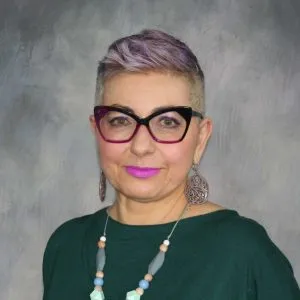
Bruce K Friesen, PhD
Dr. Bruce K. Friesen is an applied sociologist whose work centers on designing and carrying out research that has immediate real-world relevance. His work includes conducting research projects for clients as well as framing questions in academic research projects that are intentionally structured to inform practice, policy, and organizational decision-making. Across these settings, his goal is consistent: to use sociological theory and methods to produce findings that are both analytically rigorous and practically useful.
Dr. Friesen’s applied orientation developed during his graduate training, telling us:
After taking a year-long course in Applied Sociology in graduate school I framed my research question for my dissertation that provided informed theory on the relative performance of nonprofit and for-profit child care organizations AND provided practical feedback to providers on providing quality child care.
He holds a Bachelor of Religious Education (BRE) from Hillcrest College, a Bachelor of Arts in History from the University of Waterloo, and both a Master of Arts and Ph.D. in Sociology from the University of Calgary. Together, this interdisciplinary educational background supports his ability to approach social questions historically, organizationally, and empirically, with an emphasis on producing research that matters beyond the academy.
We are excited to share Dr. Friesen’s reflections on his career, his advice for future applied sociologists, and his insights on what it means to be an applied sociologist. Please continue reading below for our full interview with Dr. Friesen.
Using Sociology in Practice
In general, how do you use sociology in practice?
I draw from my expertise in the sociology of bureaucratic organizations to identify goals and design programs to achieve those goals while incentivizing and rewarding those with whom I work.
How do you use sociological research methods in practice?
Training in sociological methods provides exposure to a larger variety of methods than other social sciences. This provides me with a plethora of tools by which to gather data to answer research questions.
How do you use sociological theory in practice?
Nothing happens without people. The best approach to any problem-solving is to solicit feedback from stakeholders, design programs together, and effectively communicate (i.e. overshare) along each step of the process. Compliment and applaud the contributions of others.
Lessons for Future Practitioners
What types of courses should undergraduate students take in preparation for a career similar to yours?
Sociological theories and any research methods course you can take, including applied sociology if it is offered. Supplement that with electives in your areas of interest.
What types of courses should graduate students take in preparation for a career similar to yours?
Applied research isn’t always respected in academic programs. It’s important to choose a grad school that, at the least, offers a course or two in applied areas and has a supportive faculty member who sees the value of applied sociology that can serve as your advisor.
What types of experiences should undergraduate students seek in preparation for a career similar to yours?
Internships, service learning opportunities, taking part in competitions like the Annual Student Problem-Solving Competition offered by the Association for Applied and Clinical Sociology. Take any opportunity to get into the community to apply your skills.
What types of experiences should graduate students seek in preparation for a career similar to yours?
Any opportunity to be a part of a project that collects data in real-world situations. Experience is critical.
More generally, what are the best outlets to learn more about the work you do as an applied or clinical sociologist?
Join an association with an applied focus, such as the Association for Applied and Clinical Sociology, or the Practice section of the American Sociological Association. Others are the American Evaluation Association or those whose members focus on making improvements in a specific area like health or social work.
What advice do you have for aspiring applied and clinical sociologists?
Don’t doubt the skill-base you bring to the table. Learn all you can both in classes AND from those working in applied organizations. Your passion to make the world a better place is an asset. Protect it, nourish it, and use it to motivate you. OWN the contributions you’ve made, even if you think you could have done a better job (which we all do).